1. What makes a hidden picture puzzle hard?
Four things decide how hard a puzzle is: how many things there are to find, how small they are compared with the picture, whether they are upright or tilted, and how busy the lines are around the hiding place. An umbrella on empty snow is spotted at once; a pencil lying across roof tiles takes much longer.
For the ColorBookPage puzzles, the scene and the objects were made separately, and a program chose where to place each object. That is how we know exactly how many things there are and where they are, and why the on-screen check and the circles on the answer sheet use the same positions.
2. The levels side by side
- Hidden objects, Easy (ages 4–5): 5 things. The long side of each is about 11–13% of the picture width, and all are the right way up.
- Hidden objects, Medium (ages 6–7): 8 things. About 8–9% of the picture width, tilted a little to the left or right (up to 25 degrees).
- Hidden objects, Hard (ages 8+): 12 things. About 5–6% of the picture width, some upside down or on their side, placed in busy patterned areas.
- Shape hunt, Easy (ages 3–4): two circles, two triangles and two squares, 6 in all.
- Shape hunt, Medium (ages 4–5): stars join in, for four kinds and 9 shapes (3 circles, 2 triangles, 2 squares, 2 stars).
- Shape hunt, Hard (ages 5–6): hearts join in, for five kinds and 12 shapes (3 circles, 3 triangles, 2 squares, 2 stars, 2 hearts).
3. Picking the right puzzle for your child
- For a first hidden picture puzzle, start with Easy whatever the age, so the first sheet ends with "I found them all".
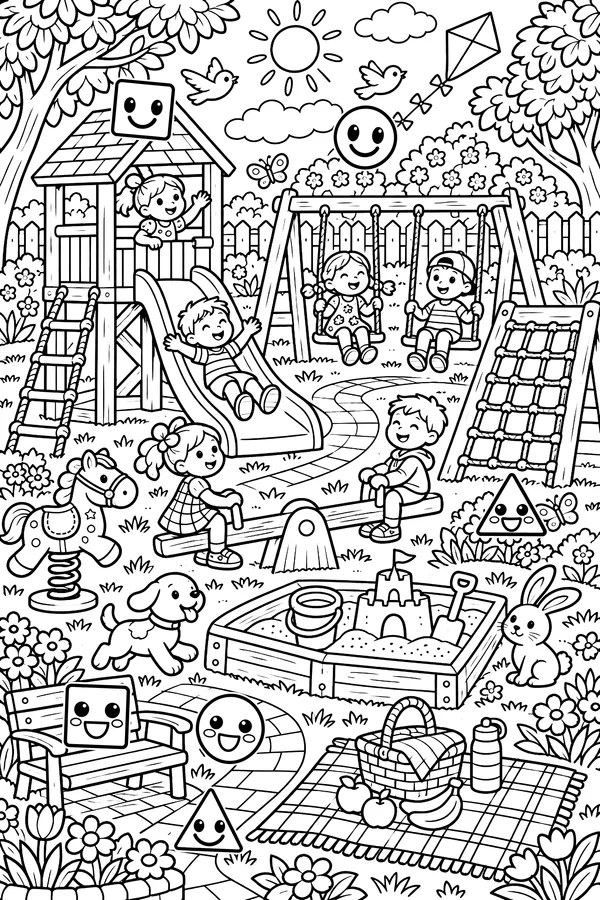
- Three- and four-year-olds who do not yet know many object names do well with the shape hunt. Shape friends have a smiling face, which sets them apart from round things in the background such as windows and balls.
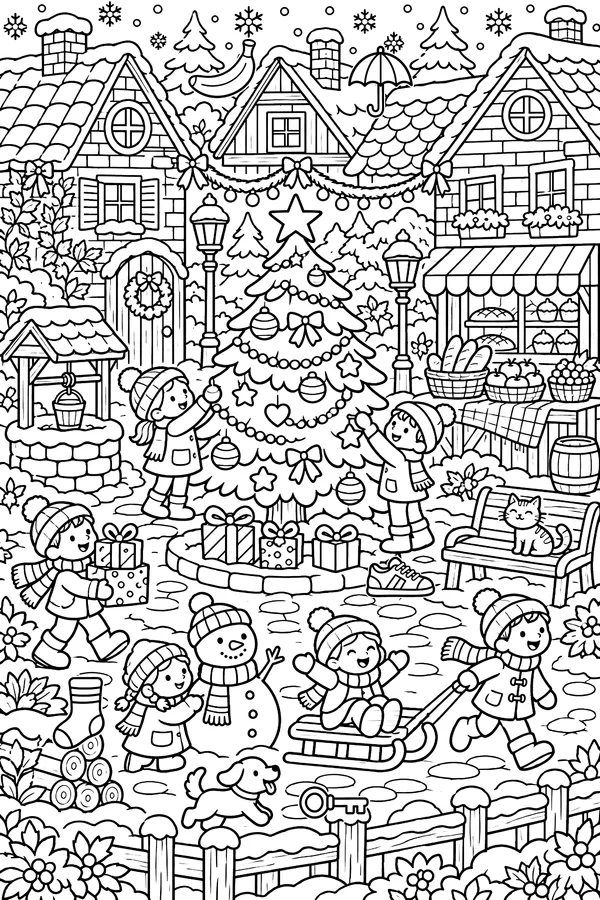
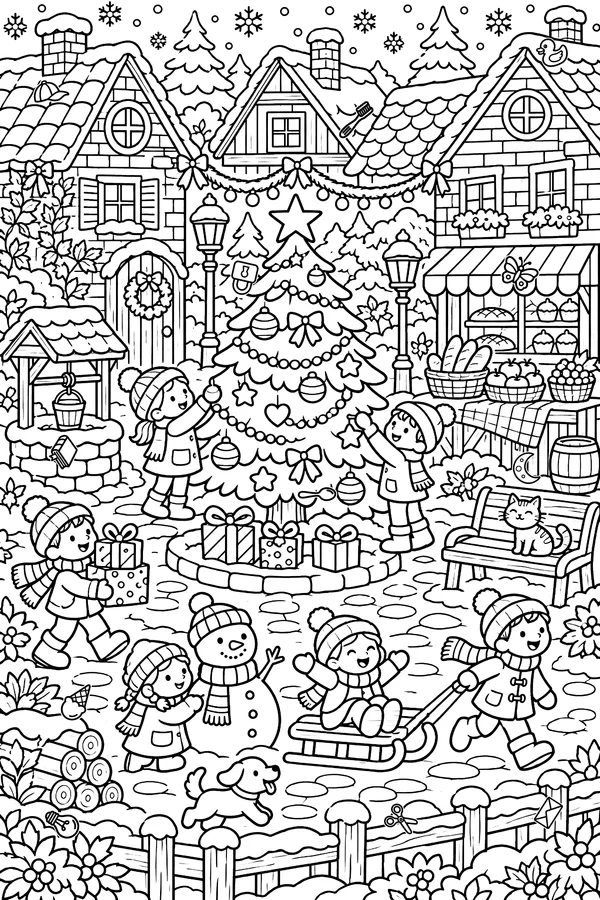
- When Easy is finished without help, move to Medium of the same theme. The Christmas village and the playground use the same scene at all three levels, so children take on smaller objects in a picture they already know.
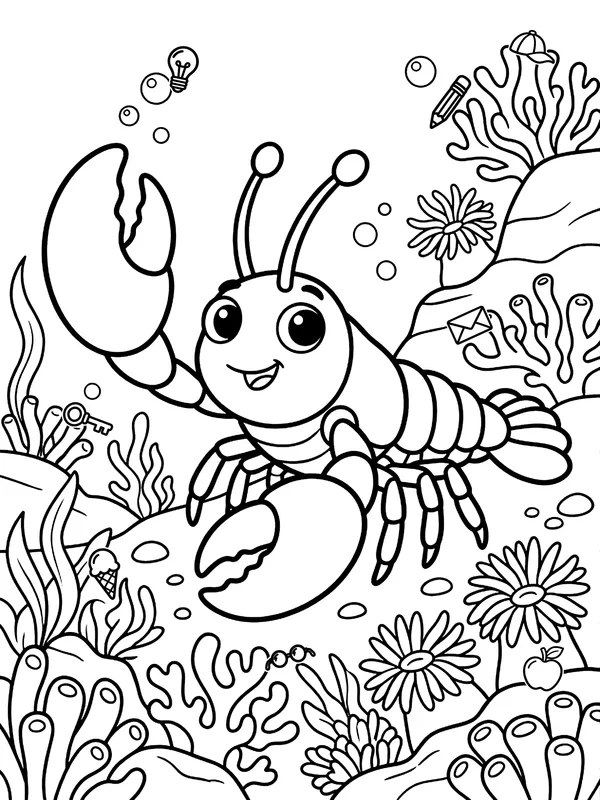
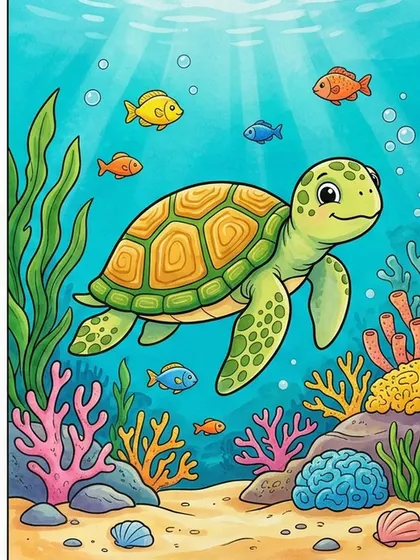
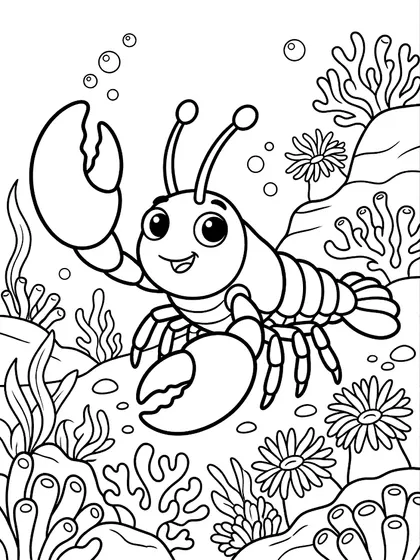
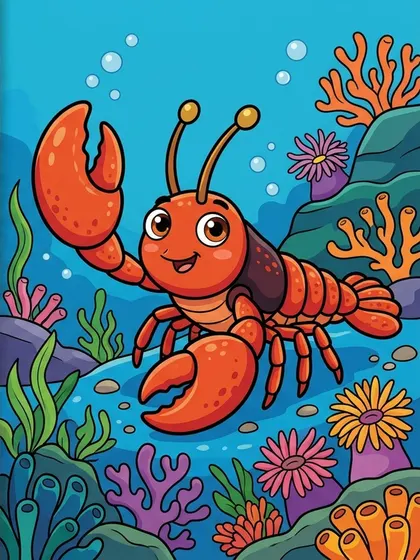
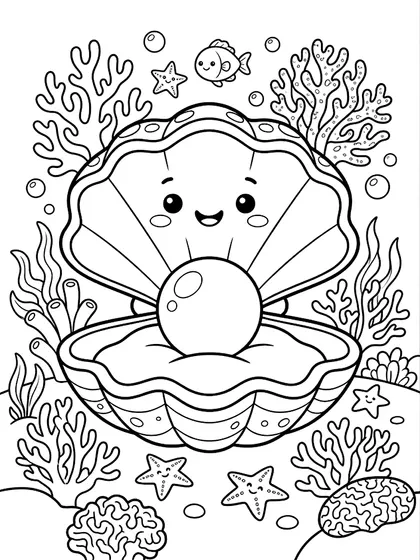
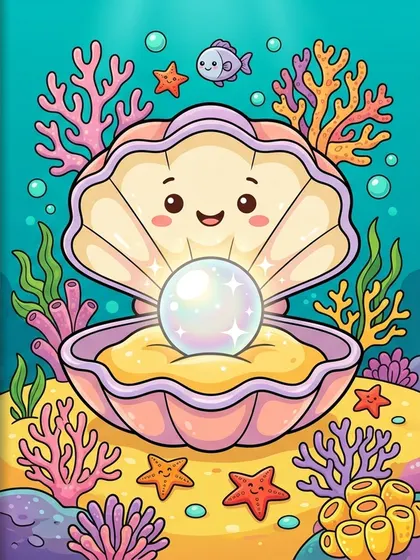
- The undersea theme has a different picture at each level (a sea turtle, a lobster and a giant clam), which suits children who get bored seeing the same picture again.
- For siblings or a mixed class, hand out different levels of the same theme. The scene and the story are shared, so everyone can talk about it together.
4. How the tap-to-find screen works
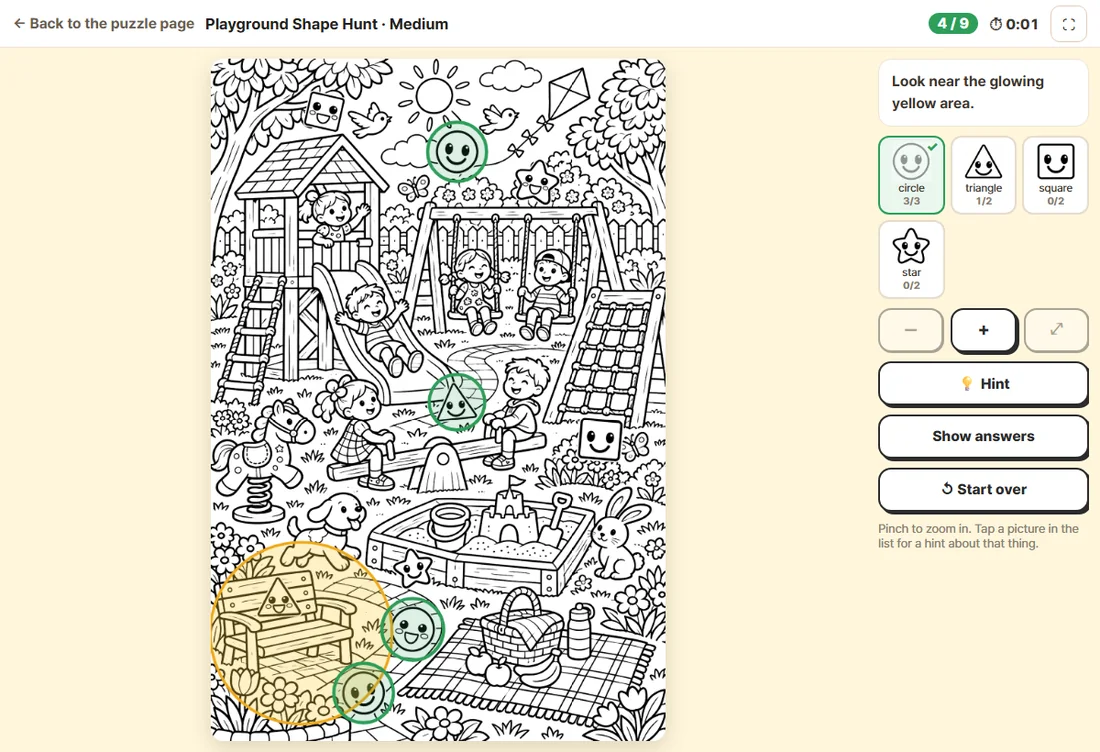
Press "▶ Play" on a puzzle page to open the picture in a new window. Tap what you find with a finger, a stylus or a mouse: a green circle appears and the thing is ticked off in the list at the side (below on a phone). Because a fingertip can be bigger than the object, a tap within a finger's width of its center counts. A wrong tap only shows a red X for a moment; no points are lost.
On a phone, pinch with two fingers to zoom in up to 4 times and drag with one finger to move around. The + and - buttons and the mouse wheel work too. A drag is never counted as a tap.
- Hint: a wide area around one remaining thing glows yellow for about three seconds. The center of the area is not the answer, so there is still some searching to do. Tapping a picture in the list gives a hint for that thing.
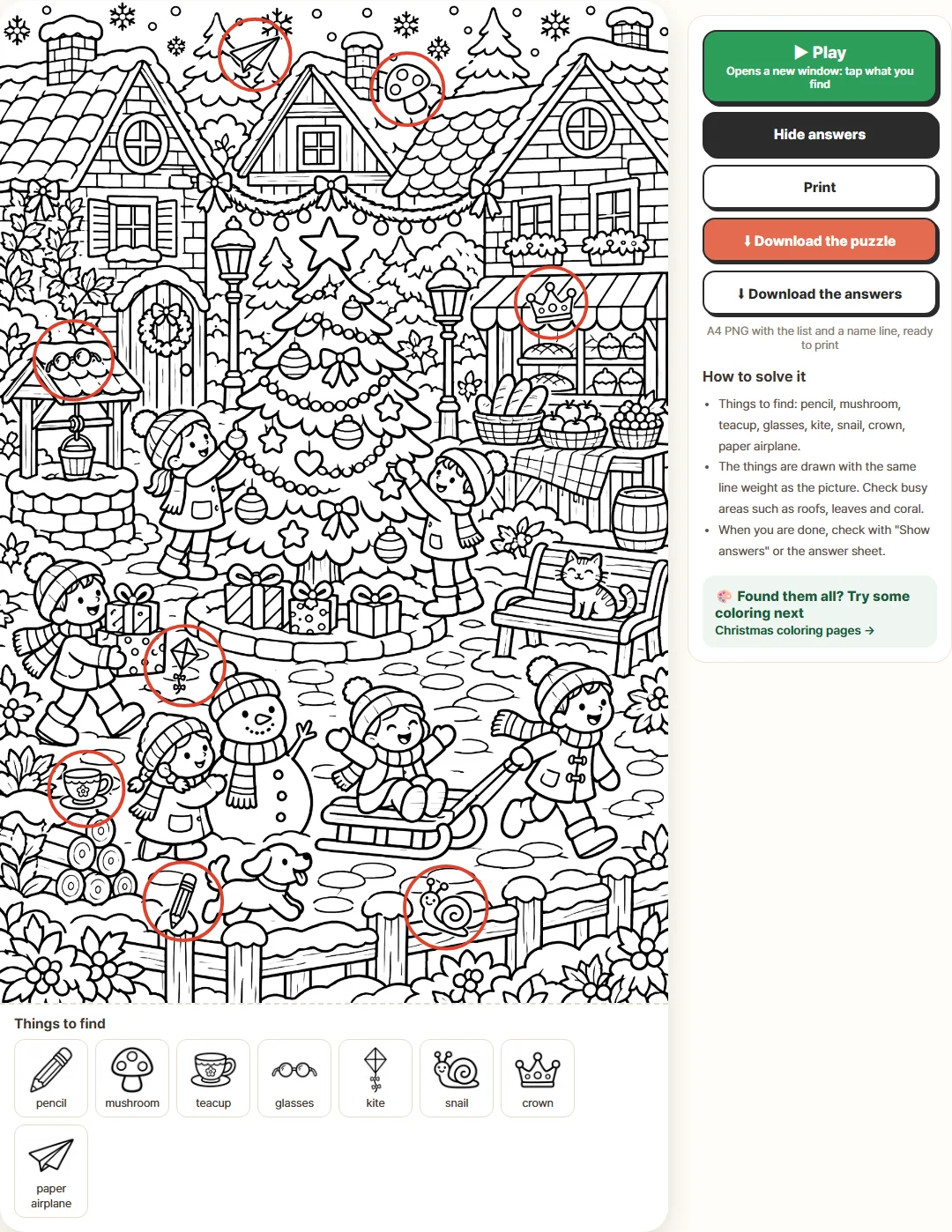
- Show answers: draws dashed circles around everything not yet found. Press again to hide them.
- Stars: three stars for finishing with no hints and at most 3 wrong taps, two stars for up to 2 hints and 8 wrong taps, and one star if the answers were shown.
- Once a stylus has been used, a resting palm is no longer counted as a tap.
5. Printing the question and answer sheets
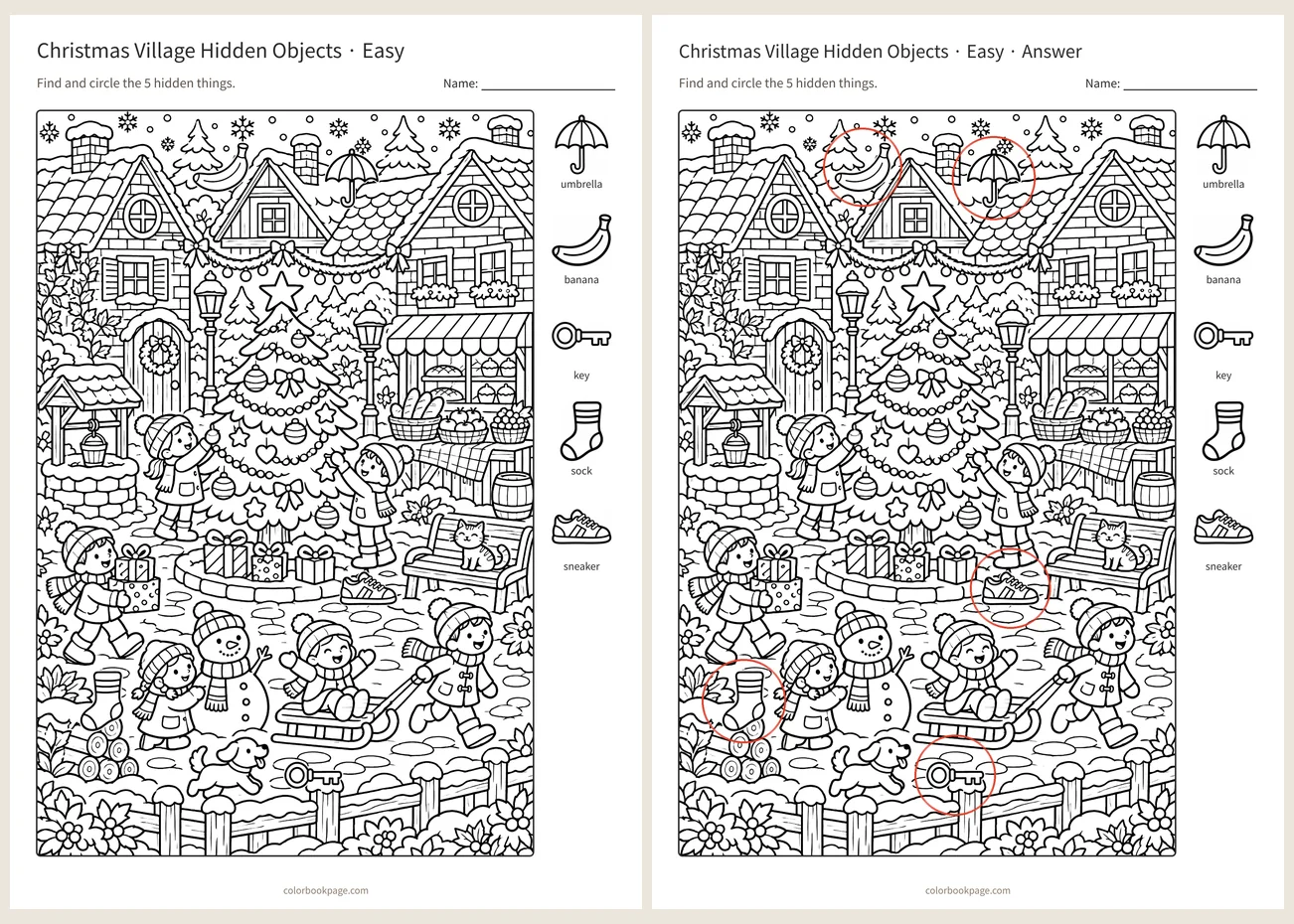
On the right of each puzzle page (below on a phone) are "Download the puzzle" and "Download the answers". Both are A4 portrait PNG images with the puzzle name and a name line at the top and pictures and names of the things to find beside the picture. The answer sheet has a red circle at every position.
When printing, choose A4 and turn on "Fit to page" so the edges are not cut off. The pictures are line art only, so they print well on a black-and-white printer. For a quick copy, the "Print" button on the puzzle page prints the picture and the list from the screen.
6. Helping when a child is stuck
- First describe one feature: "The key has a round ring", "The umbrella handle is hooked".
- If that is not enough, narrow the area: "It is in the top half", "Look near the roofs".
- Split the picture into four parts and point to one part at a time.
- On screen, press Hint once. On paper, show the answer sheet briefly and cover it again.
- If something is never found, show it and talk about why it was hard to see (it blended into a pattern, it was upside down).
7. A 30-minute lesson
- Open with the scene (5 minutes): look at the picture together and say what you can see. Read the names of the things to find out loud.
- Search (10 minutes): hand out the level that fits each child and have them circle finds with a pencil. Early finishers get the next level.
- Check (5 minutes): show the answer sheet on a screen or swap with a partner. Ask which thing was hardest to find.
- Color (10 minutes): color the found things first, then the rest of the scene. In the shape hunt, giving each kind of shape its own color turns it into a sorting activity.
8. Afterwards: on to coloring
Every puzzle picture is line art, just like the coloring pages. Children can color the question sheet itself, or follow the link at the bottom of the puzzle page to coloring pages on the same subject. The undersea puzzles are based on the sea turtle, lobster and giant clam coloring pages on this site, so they lead straight to the original page without the hidden things and its colored reference.
Try the puzzles from this guide
Open a puzzle to download its question and answer sheets, or press "Play" to tap what you find in a new window.
 Christmas Village Hidden ObjectsHard · Ages 8+
Coloring pages to go with the puzzles
FAQ
From what age?
We suggest the Easy shape hunt from about age 3 and the Easy hidden objects from about age 4. More than age, look at whether the child can scan a picture calmly.
Where are the answers?
In the "Show answers" button on the puzzle page, in the downloadable answer sheet and in "Show answers" on the play screen. All three mark the same positions.
Does it work on a phone?
Yes. Pinch to zoom and drag the picture as you search. The Hard level has small objects, so a tablet, a computer or a printed sheet is more comfortable.
Can I print in black and white?
Yes. The puzzle pictures are black lines only. Only the circles on the answer sheet are red, and they print as gray circles.
Why are the hidden things so out of place?
We chose things that would not normally be in the scene, such as an umbrella in a winter village or a pencil under the sea, so that they are not confused with things that belong there (apples in a basket, shells on the sea floor).