1. Ten Snow White pages: a gentle day in her life
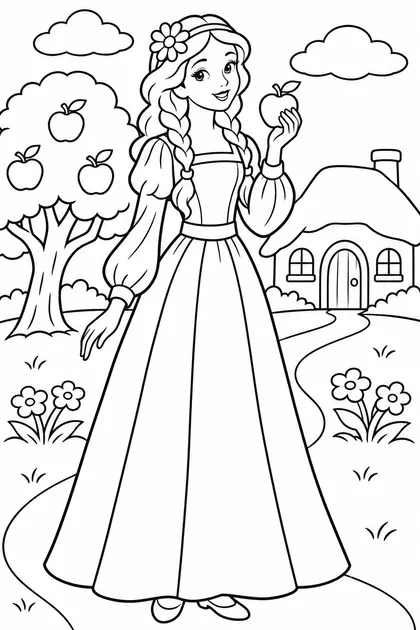
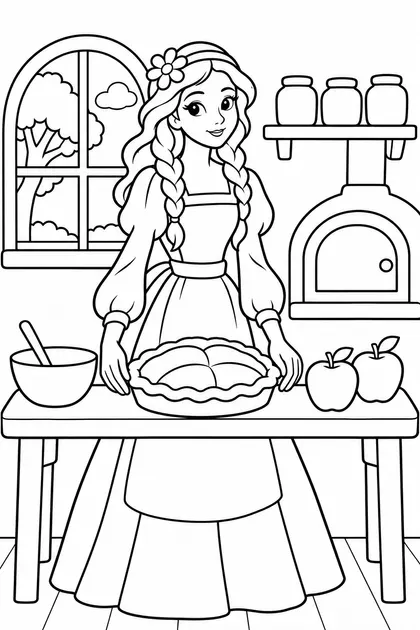
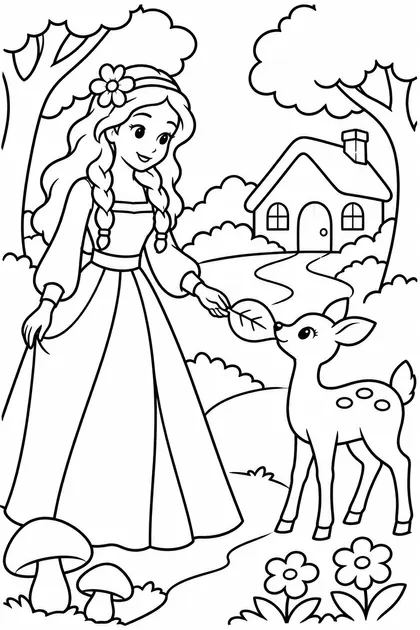
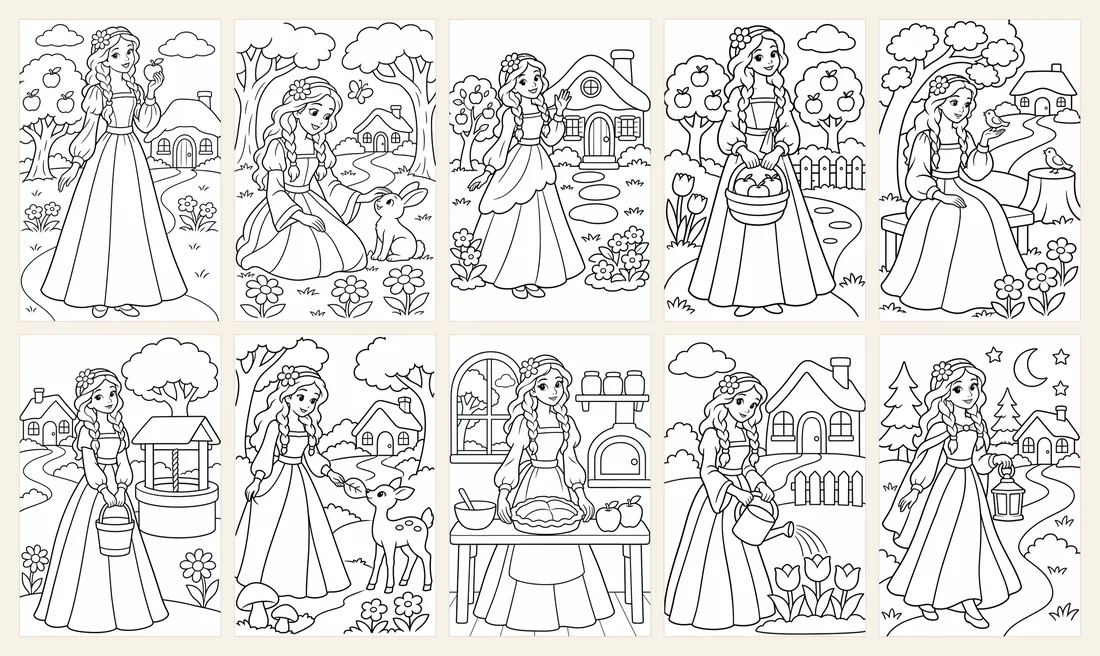
We newly designed Snow White from the Brothers Grimm fairy tale, with braids, a daisy headband and a long medieval-style gown. There is no wicked queen or poisoned apple here; instead, ten scenes show a day in the woods and around the cottage.
- Garden and orchard: apple garden, orchard basket, watering the flowers
- Woodland friends: woodland rabbit, little deer, songbird garden
- Cottage and village: woodland cottage, wishing well, apple pie
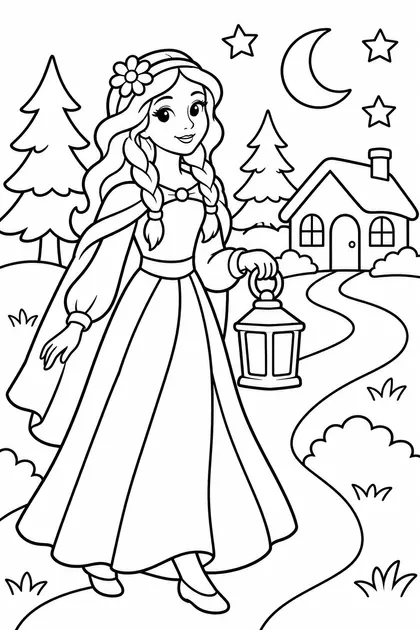
- Night scene: lantern walk
2. Ten princesses with backgrounds: each lives somewhere different
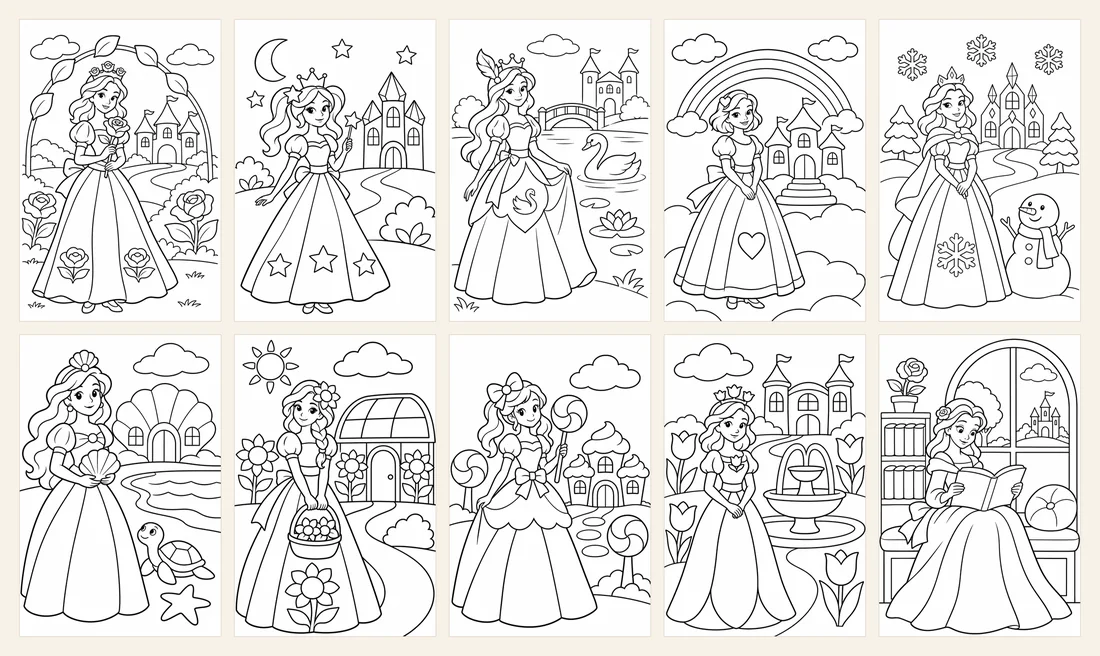
These go one step beyond a simple princess figure: you color where she lives, too. Big buildings and props add more to color while the spaces stay wide.
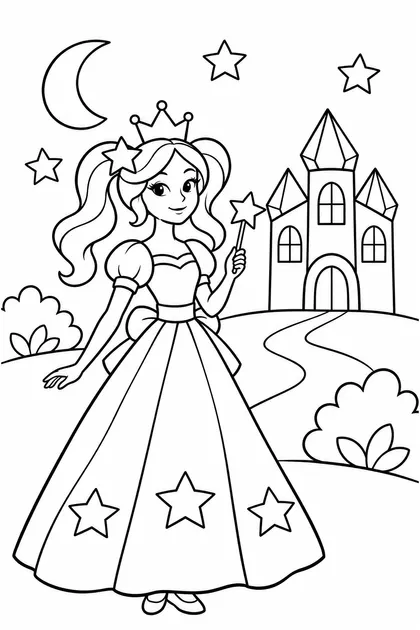
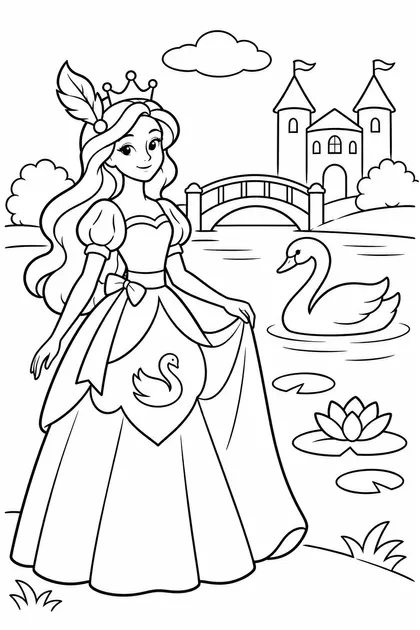
- Castles and palaces: Rose Princess Rosella’s little castle, Starlight Princess Luna’s moon castle, Swan Princess Aria’s lakeside palace, Rainbow Princess Chloe’s cloud castle, the Snowflake Princess’s winter ice palace
- Sea and garden: Pearl Princess Marina’s seashell palace, Sunflower Princess Sunny’s glass greenhouse, Tulip Princess Flora’s garden fountain
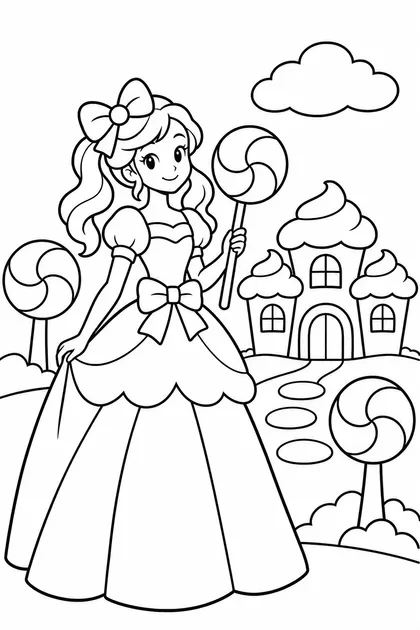
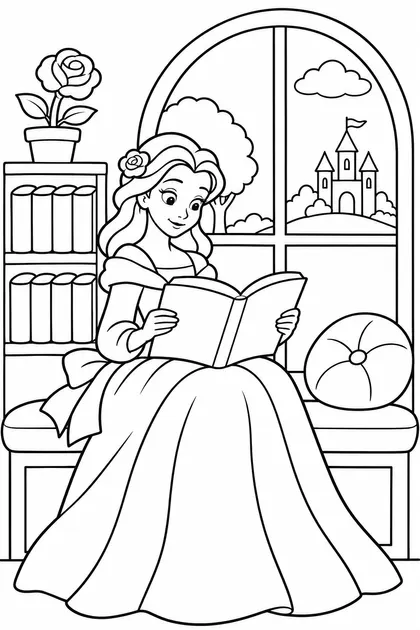
- Sweet and quiet places: Candy Princess Lolly’s cupcake castle, the Book Princess’s window library
3. What age are they for?
Counting the white spaces in the line art gives 73 to 143 per page. The earlier 30 princess and castle pages have 130 to 450 (median 300), so these are far simpler and younger children can more easily finish one.
- Ages 5–6: start with pages under 100 spaces: seashell palace (73), cloud castle (80), little deer (86), lakeside palace (88), moon castle (89), songbird garden (92), cupcake castle (95).
- Ages 6–8: pages over 100 spaces are fine too: glass greenhouse (143), wishing well (138), woodland cottage (136), little castle (129), apple pie (128).
- A page takes about 20 to 35 minutes. It is fine to color the princess one day and the background the next.
4. An order for coloring without a reference
These 20 pages are line art only. With no set colors, choosing them becomes part of the activity. For a first try, we suggest this order.
- Start with the widest part, the gown. Once its color is chosen, the rest is easier to decide.
- Color the hair and props: apples, baskets, lanterns, books. Colored pencils are handy for small spaces.
- Color the background in order: buildings, trees, sky. The lantern walk and moon castle are night scenes, so try navy or purple for the sky.
- Each page also lists a coloring order, questions to talk about and a follow-up activity.
5. Using them in class and at home
- Story chain: lay out the ten Snow White pages, order them from morning to night, and tell the story one scene at a time. It pairs well with our princess story relay guide.
- Motif hunt: draw a card for stars, swans, a rainbow, shells, candy or books, then find and color the princess who matches.
- Princess village map: put the finished pages on the wall and draw the roads between them.
- Follow-up activities: after the apple pie page, cut an apple and count the seeds; after watering the flowers, plant a seed in a small pot.
6. Printing tips
Use the download button on each page to get the PNG and print it on A4. The picture is a slightly different shape from A4, so turn on “Fit to page” and margins in the print dialog to avoid cropping. To color on screen without printing, press “Color it online.”
Pages used in this article
FAQ
Are the new pages free?
Yes. Print as many as you need at home or in schools, nurseries and classes. Selling or redistributing the files themselves is not allowed.
Why is there no color reference?
These 20 pages were made as line art. The earlier 30 princess and castle pages do have color references, so look at their gowns if choosing colors is hard.
Is this the Snow White from the movies?
No. We designed her hair and clothes from the old Brothers Grimm fairy tale, without copying a character from any film or animation.
Do the seven dwarfs or the queen appear?
Not in these ten pages, which show only Snow White, woodland animals and everyday scenes around the cottage. When reading the story together, imagine the next scene with your child.
What is the upper age?
The wide spaces suit ages 5 to 8. Older children and adults can add gradients or draw small patterns in the background.