


The 60-minute schedule: arrive, set up, color, share, go home
- 0-5 min, arrival: bags away, hands washed, seated. Children who arrive early pick today's page from the page baskets.
- 5-10 min, desk setup: each group leader fetches the group basket (pencils, erasers, name stickers) and clears the desk of everything else.
- 10-15 min, instructions: state no more than three rules and show a two-minute demo of coloring one area. Set the timer for 25 minutes.
- 15-40 min, coloring: the teacher circulates between groups. Around minute 12, stop for one minute to shake out hands and drink water.
- 40-45 min, cleanup: tools back in the basket, names on the back of the page. Unfinished pages go in a 'finish next time' folder.
- 45-55 min, sharing: children introduce their pages inside the group, then one representative per group says one sentence to the class.
- 55-60 min, pickup: bags packed, children handed over one by one at the agreed time.
Groups of three or four, with a rotating leader
For 12 to 15 children, four groups of three or four work well. Put a pencil pot, erasers and name stickers in one basket per group so nobody wanders the room to borrow things. The leader fetches the basket, checks that cleanup is done, and tells the teacher when a friend needs help. Nothing more. Rotate the job weekly so everyone gets a turn.
Arrange desks in a U or in islands so the teacher can see every group's hands from one spot. If ages are mixed, seat an older child with younger ones in each group rather than grouping by grade. Helping each other becomes the normal mood.
Prepare pages at three levels: easy, medium, challenge
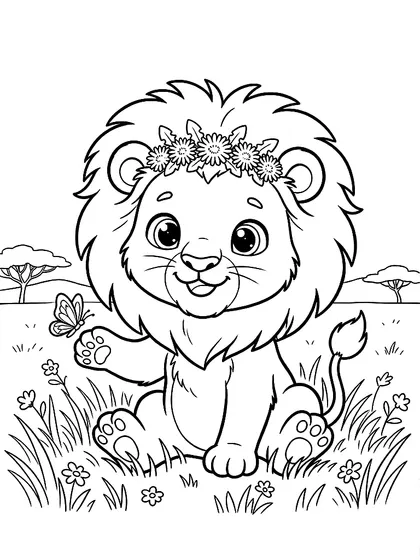
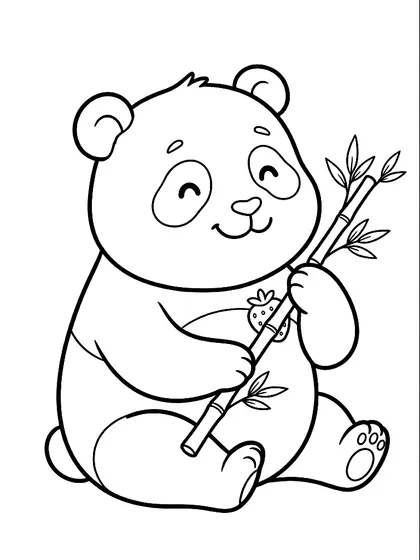
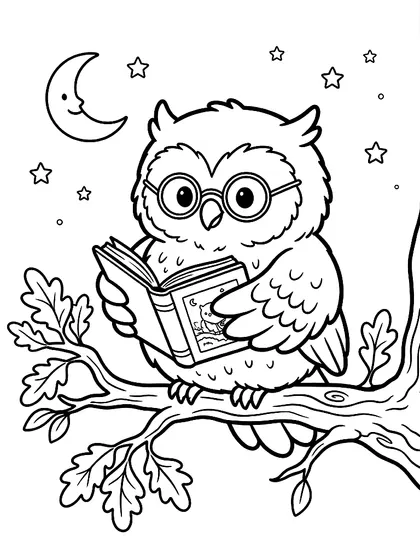
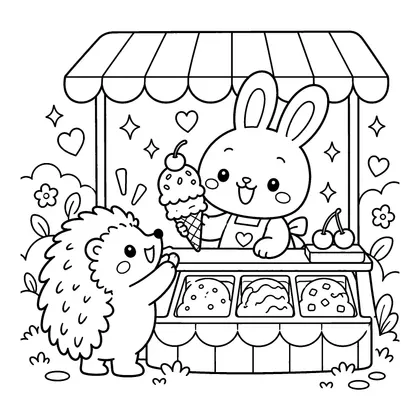
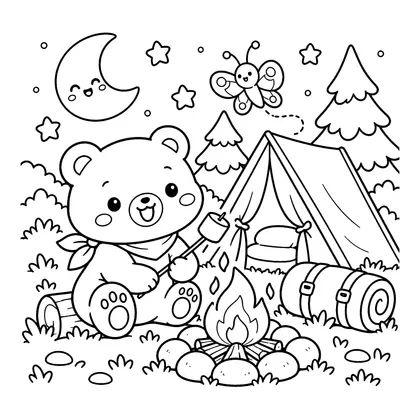
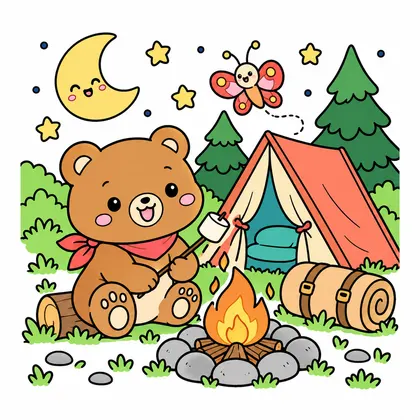
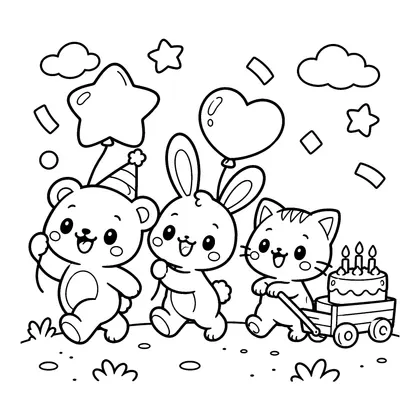
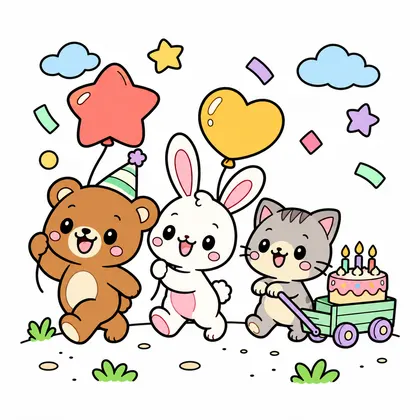
If children choose their own page as they arrive, there are fewer arguments over pages. Put pages with one large animal in the easy basket, such as the lion Leo or the panda Panpan. The cute animal series is drawn with thick lines and large areas, so these pages fit comfortably into 25 minutes. The medium basket can hold a bird page such as Ollie the owl. The challenge basket holds busy scenes with many props: the bunny ice cream shop, the bear camping under the stars, or the animal friends birthday parade.
Print the number of children plus three, per level. Six of each means 15 children can all choose and you still have spares. Tell older children in advance that picking an easy page is fine. Some days you simply want to color a simple one carefully.
How one teacher circulates among 10 to 15 children
- Give each desk a green cup and a red cup. Green on top means 'I'm fine'; red on top means 'please help'. You can see who needs you without running to every raised hand.
- In the first five minutes of coloring, go first to the children who have not started. Getting them going early makes the remaining 20 minutes much easier.
- Stay no more than three minutes at one group. A lap around four groups takes about 12 minutes, so you can make two laps in 25 minutes.
- Answer questions with questions: 'Where would you like to start?' or 'Which color might suit this part?'
Things you can say during the activity
- A child cannot choose a color: 'What color would this animal like best?'
- A child is upset about going outside the lines: 'That's fine. Now it's the grass outside the picture.'
- A child compares with a neighbor: 'It's the same page but different colors, so it's more fun.'
- A child finishes very early: 'Could you color the sky and the ground behind it?'
Finishing the sharing in ten minutes
If 15 children each come to the front, even 40 seconds each fills ten minutes. So split sharing into two steps. First, three minutes inside the group, taking turns to introduce your own page. Then one representative per group says, in one sentence, the color combination the group liked best.
A sentence frame helps: 'My page is ___, and the part I worked hardest on is ___.' Change representatives every week, and let a child who dislikes speaking simply stand and hold up the page.
When time is left over, and when it runs short
- Extra time: offer, in order, coloring the background, giving the page a title, writing one story line on the back, or helping with cleanup.
- Short on time: cut sharing to one representative per group and protect the five-minute cleanup. Unfinished pages go in the folder and are continued in the first ten minutes next time.
- For a 40-minute class: arrival and setup 5 min, instructions 3, coloring 20, cleanup 4, sharing 5, pickup 3.
Common mistakes and safety
- Long instructions. Keep them under five minutes and the rules to something like 'color at your seat, ask before looking at a friend's page, finish tidying up'.
- Insisting every page be finished. Some pages will not fit in 25 minutes. Praise sitting down and coloring for the whole time more than completion.
- Sharpen pencils before class, not during it. If you add a cutting activity, hand out one pair of scissors per group.
- With markers, put scrap paper under the page and print on paper a little thicker than copy paper.
Pages used in this article

FAQ
How many pages should I print?
Print the number of children plus three for each level. For 15 children that is six per level, 18 in all. One color reference for the teacher, or showing it on a screen, is enough.
How long does preparation take?
Allow about half an hour the first time for choosing pages, printing and filling the baskets. The baskets and cups are reused every week, so from the second week only printing is left.
What if a child dislikes coloring?
Let them pick the simplest page from the easy basket and tell them that coloring just one area today is fine. At sharing time they only need to show which part they colored.
Can we use online coloring on a classroom computer?
Online coloring is supported only on a PC screen with a mouse; phones and tablets are not supported yet. This schedule is written for printed pages.