
Five tools side by side
- Colored pencils: fine lines make them good for small areas and edges. Press hard for a strong color, lightly for a pale one, so one pencil gives two shades. Filling large areas takes a long time for young children with weak hands.
- Crayons: one pass gives a strong color and large areas fill quickly. The thick tip drifts outside the lines on small details, and another color layered on top does not stick well.
- Water-based markers: bright color with no pressure needed. Leave the tip on one spot and the ink spreads, and on thin paper it shows through the back. Caps left off let the tip dry out, so close them as soon as you are done.
- Watercolor pencils: color like ordinary pencils, then rub with a wet brush and the color blends like paint. The more water you use, the more the paper can buckle.
- Paint: soft color over large areas, but it needs setup and cleanup. Thin paper ripples, and depending on the printer the printed lines can run when wet.
Which tool for which age
- Around age 3: thick crayons are easiest. A child can hold one in the whole fist and still fill an area, and going outside the lines hardly shows. Stay close so crayons stay out of mouths.
- Around age 5: mix crayons and colored pencils. Use crayons for large areas and pencils for eyes and patterns, and children succeed more often.
- Age 7 and up: add markers and watercolor pencils. Fine pencils can follow edges; for water activities, an adult stays nearby.
- These are only general guidelines. Grip and hand strength differ from child to child, so favor the tool the child is comfortable with.
Paper thickness and tools
Pencils and crayons are fine on plain copy paper (around 80 gsm). Markers soak in more the longer they sit, showing through the back and sometimes marking the desk, so print on paper of 100 gsm or more or slip scrap paper underneath. Watercolor pencils and paint use water, so thicker paper suits them better.
Not every printer accepts thick paper, though. Check the paper pack and the printer manual for the thickness it can feed. If it cannot, print on copy paper and glue the sheet onto drawing paper. Lines from an inkjet printer can also run when wet, so test one page before you bring out the paint.
Reducing bleeding and show-through
- With markers, start with light colors and do not hold the tip in one place. If you put dark colors down first, the light ones pick them up and turn muddy.
- To combine crayon and pencil in one area, use pencil first and crayon after. Because of the wax, pencil does not take well over crayon.
- With paint, rinse the brush and dab it on a tissue to take off extra water. Let each layer dry before layering again.
- A sea animal page's background works for crayon-resist play. Draw wave patterns in a light crayon first, then paint thin blue over it. The waxed lines repel the paint.
Matching tools to pages
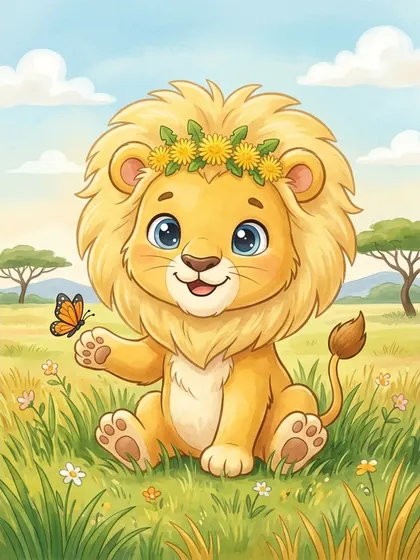
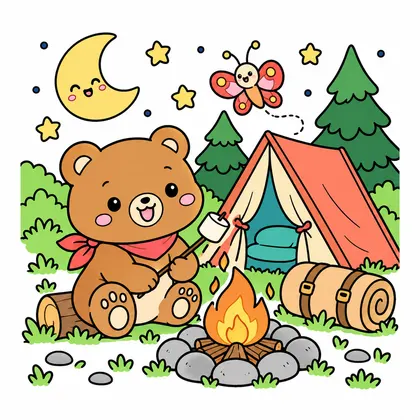
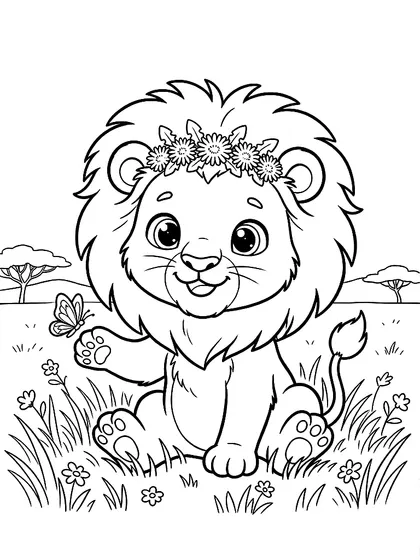
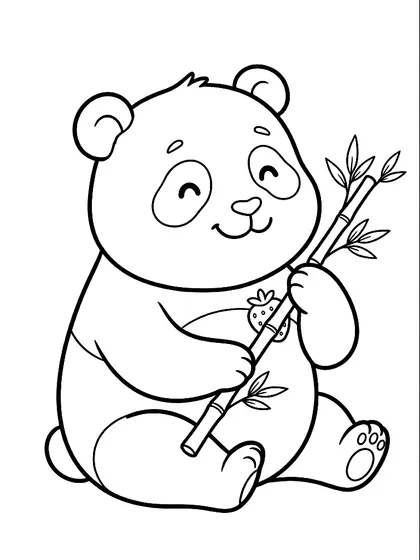
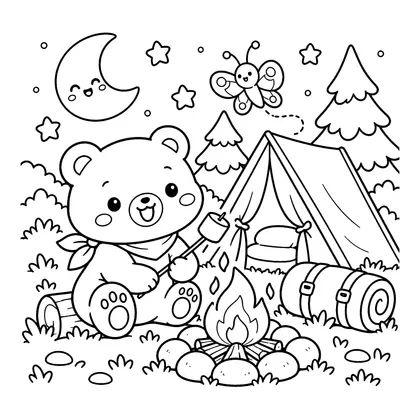
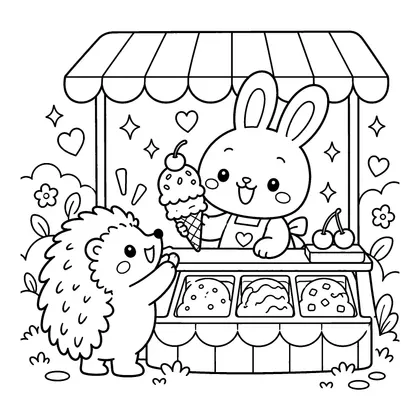
Leo the lion and Panpan the panda have thick lines and large areas, so crayons fit them well. For busier scenes such as the bear camping under the stars or the bunny ice cream shop, follow the edges with colored pencils and use markers only as accents where you want a strong color, such as eyes or stars.
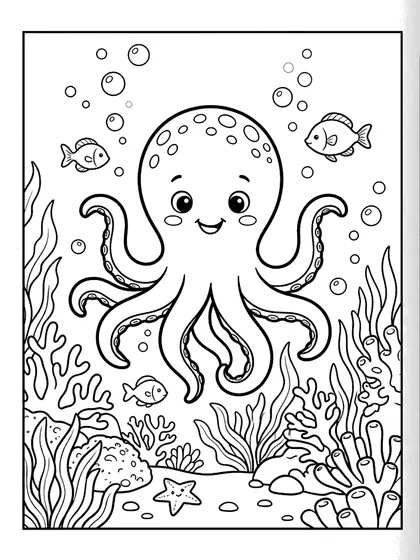
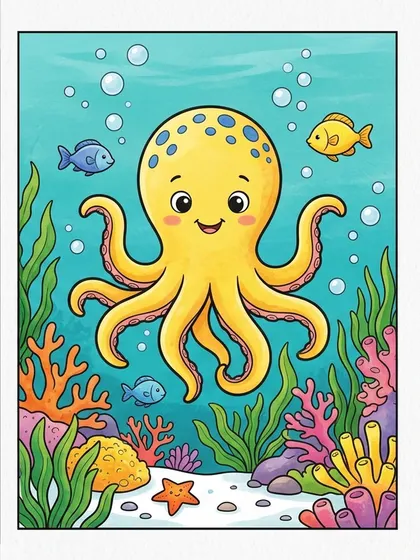
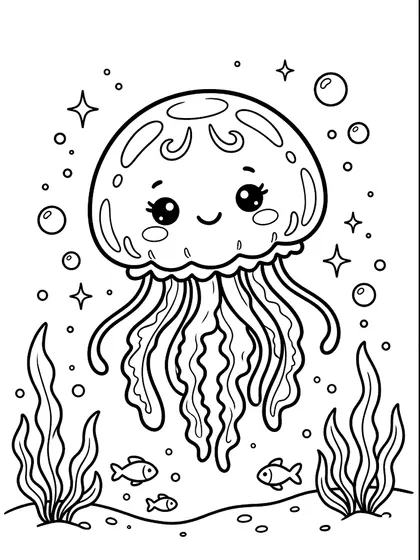
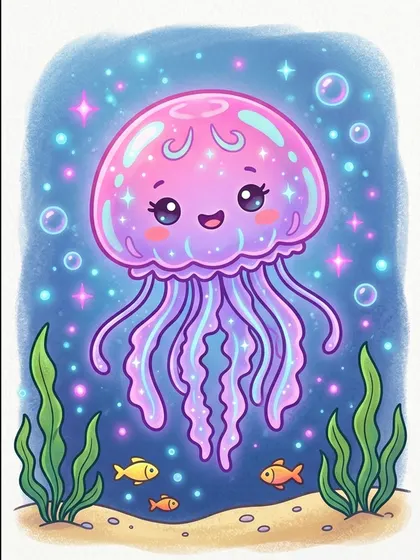
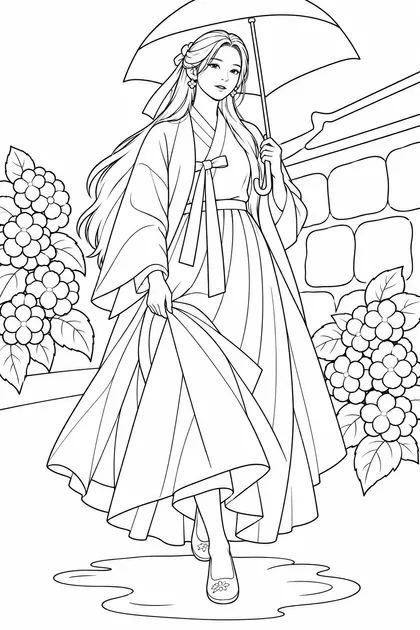
On the octopus Chalrangi and the jellyfish Jelly, color the body in pencils and let the sea behind it blend in watercolor pencil or paint for an underwater feel. For adults, the June hydrangea hanok lane page in Haewon's monthly series is simplified into large areas, which makes it a good page to practice layering pale hydrangea colors with watercolor pencils.
Test on one page before you start
Print one extra copy of the page as a test sheet. On its margin or on scrap paper, check how the colors spread, whether they show through, and whether the lines run when wet. Doing this with a child shows how differently each tool behaves, and it gives the child a chance to choose the tool.
Safety and care
- For children's products, check that the package carries a safety certification mark.
- Keep crayon and pencil pieces out of young children's mouths. Broken pencil leads can be sharp, so pick up fallen pieces right away.
- For paint, prepare an apron or old clothes and paper to protect the floor. Wash and dry brushes the same day.
- In a classroom, a basket of about twelve colors per group saves children from walking around to borrow tools.
Pages used in this article


FAQ
The marker shows through to the next page. What can I do?
Print on paper of 100 gsm or more, or put a sheet of scrap paper under the page. Starting with light colors and not holding the tip in one place also reduces bleeding.
What if my printer cannot take thick paper?
Print on copy paper and glue the sheet onto drawing paper. Marker bleed and show-through are reduced. Spread the glue thinly along the edges and corners so the paper does not wrinkle.
Which tool was the color reference made with?
The reference is a guide for choosing colors, so you do not need to match it with the same tool. Look at it on a screen for the colors and use whatever you have.
Is paint all right for young children?
From about four or five, with an adult nearby to manage the water. Choose paint with a children's safety mark, and start by putting out just two or three colors.