Color, predict, try, record
The pages in Nari’s Invention Club show Nari and her wind-up robot Toto doing experiments such as a balloon car, a paper cup telephone and growing seeds. As children color, they look at the equipment piece by piece, so carrying on to the experiment right after coloring makes explaining it much easier.
The pattern is the same for every experiment: color the page, ask, “What do you think will happen next?” and collect guesses, try a simple version yourselves, and record what you see in a drawing. The scenes on the pages are imaginary, so tell children first that real results do not have to match the picture.
Safety rules for every activity
- An adult stays close at all times, and prepares and cleans up.
- Seeds, soapy water, vinegar and baking soda all stay out of the mouth. Say plainly before you start, “This is not food.”
- Balloon pieces and small parts can choke a child. An adult inflates the balloons and picks up any burst pieces at once. Check whether any child has a latex allergy.
- If soapy water or vinegar gets in an eye, rinse with clean water right away, and an adult checks if it hurts.
- Water on the floor is slippery, so work over a tray and wipe up as soon as you finish.
- This guide leaves out experiments that need fire, hot water, electricity, sharp tools, chemicals or small magnets that are easy to swallow. If a child asks to try an experiment seen elsewhere, do not do it until an adult has checked that it is safe.
- For the seed activity, check for bean allergies first.
A 50-minute running order
- Warm-up, 5 minutes: show the page and ask, “What are Nari and Toto doing?” and find the names of the tools together.
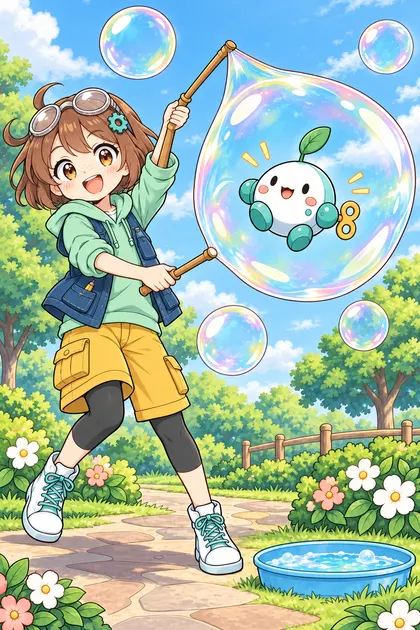
- Coloring, 15 minutes: children may focus on the equipment. Keep the color reference beside them.
- Predicting, 5 minutes: ask one question, such as “What will the car do when the air runs out of the balloon?” and collect answers. Do not say who is right or wrong.
- Trying it, 15 minutes: do the activity with materials the adult has prepared. Leave as many hands-on steps as possible for the children.
- Recording and tidying, 10 minutes: draw what they saw on the record sheet and put the materials away.
A three-box record sheet is enough
Fold an A4 sheet into three boxes labeled “What I thought,” “What I saw” and “What I wonder.” A child who cannot write yet fills in a box with a picture or a single word. If the result differs from the guess, it is not wrong but something new they learned, so have them write it in “What I saw” just as it was. Taping the record sheet to the back of the colored page keeps everything from one activity on a single sheet.
Three activities that are easy to prepare
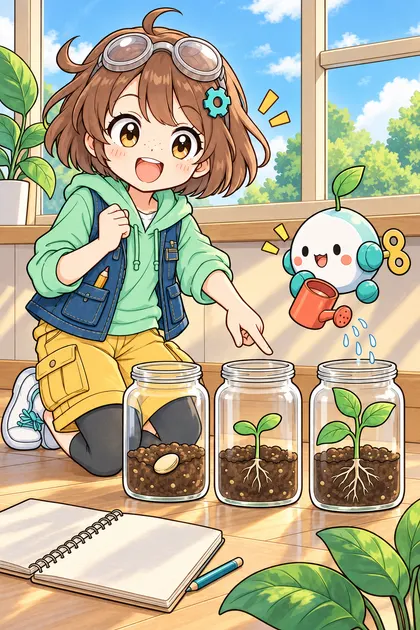
- Seed germination page: line the inside of a clear cup with a damp paper towel and slip two or three seeds between the towel and the cup wall. Kidney beans or mung beans work well. Look at the same time every day and draw what you see. After a few days to about a week, you can usually see roots appear. Keep the towel damp, and an adult throws it out if mold grows.
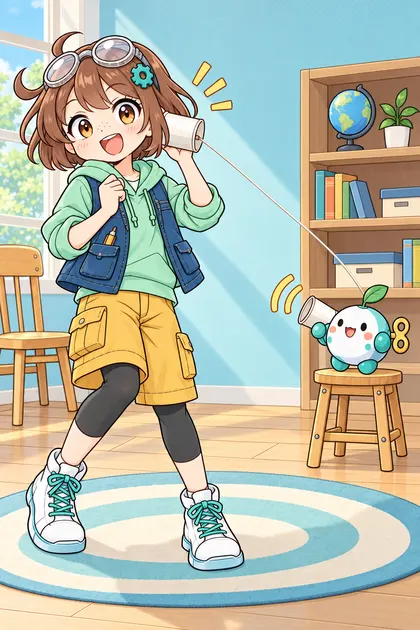
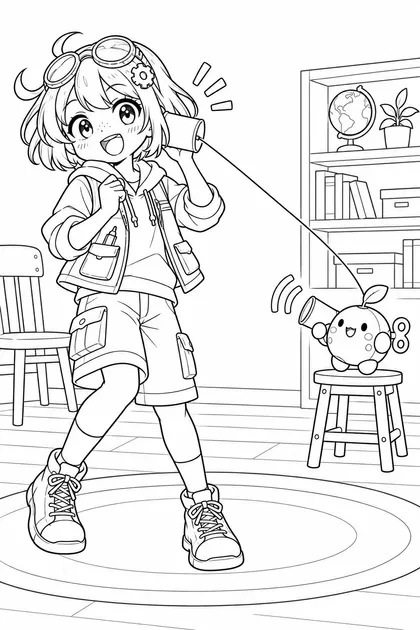
- Cup string phone page: an adult pokes a small hole in the bottom of two paper cups with a pencil tip, and joins them with string, tying a knot in each end. One child speaks into a cup while the other listens at the other cup. Have them compare a tight string with a slack one. Keep the string short, and never loop it around a neck.
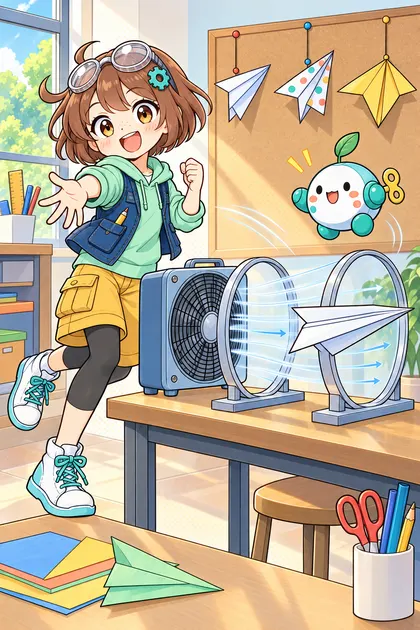
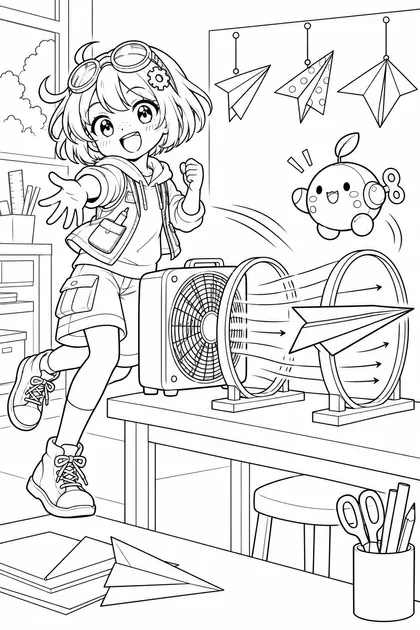
- Paper airplane wind tunnel page: fold two different airplanes from A4 paper and fly them from a starting line. Count steps to where each lands and compare. Set the rule first: never throw toward people.
Four activities that need more adult care
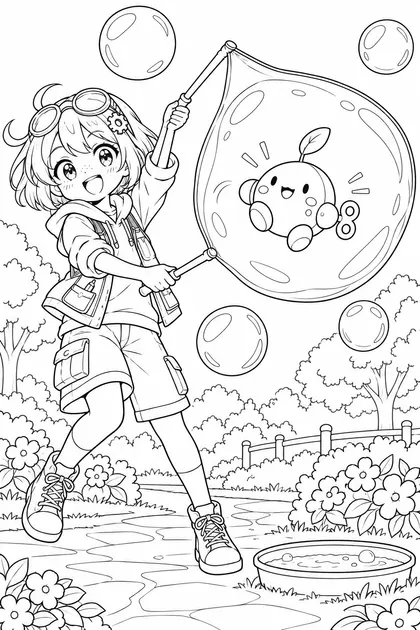
- Giant bubble page: stir a little dish soap into water for bubble solution. Swinging a loop through the air to make bubbles carries less risk of swallowing the solution than blowing through a straw. Watch whether bubbles are round and what happens as they float away.
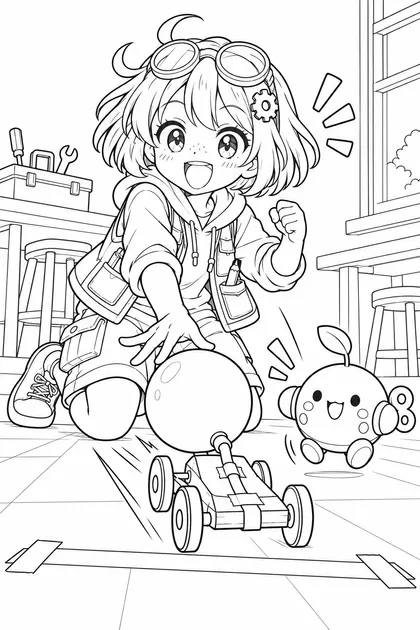
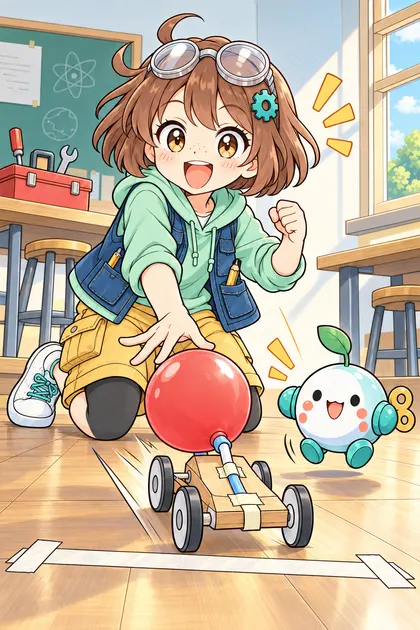
- Balloon-powered car page: tape a straw on top of a toy car, or a small box on wheels, and fix the mouth of a balloon to the straw, so the air rushing out pushes the car along. An adult blows up the balloon and keeps it away from faces in case it pops. Compare the distance with a large balloon and a small one.
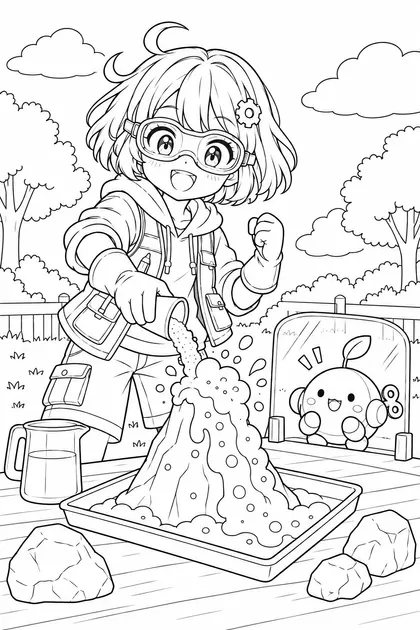
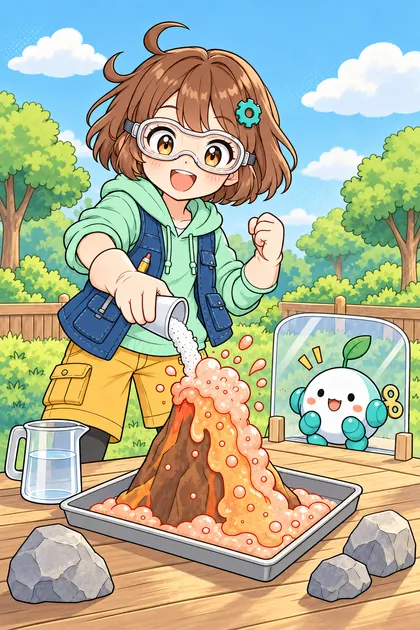
- Baking soda volcano page: set an open small cup on a tray, put in a spoonful of baking soda and have an adult pour in a little vinegar. Watch the bubbles rise and listen to the fizz. Never do it in a bottle with the cap on. Ask children to keep their faces back so nothing splashes in their eyes.
- Weather station page: look at the sky from the window each day and record the weather and cloud shapes in pictures. You can also tie a ribbon to a stick to see which way the wind blows. It is the safest activity, and the one that can run the longest.
Adjusting for age
- Age 3: stick with observation. Seeds, bubbles and the weather are a good fit. Ask simple questions such as “What do you see?” and the teacher does the recording.
- Age 5: do both predicting aloud and recording in pictures. With an adult, they can try the balloon car and the cup phone.
- Age 7 and up: change just one thing at a time and compare, such as only the balloon size or only the shape of the airplane’s wings. Record steps or days as numbers and sort them into a table.
Common mistakes and safety
- The teacher tells the result first: observation only happens when children see it themselves. Turn it back into a question: “What did the car do when the balloon got smaller?”
- Calling an attempt a failure: if the balloon car will not move, that becomes a chance to wonder why. Look together for a stuck wheel or a leaking balloon.
- Doing several experiments in one hour: do one at a time, or records and cleanup get messy.
- Starting without a trial run: an adult should try the activity once beforehand with the same materials.
- Scissors and pencil points: an adult makes any holes.
If you run short or have time left
If time is short, move trying and recording to the next session. The seed activity spans several days, so on day one just putting seeds in the cup and writing the start date can be a whole session. If time is left over, look at another page you have not colored and ask a follow-up question about the experiment. A light “Could we build another car from things at home?” is fine, even if it stays imagination.
Pages used in this article
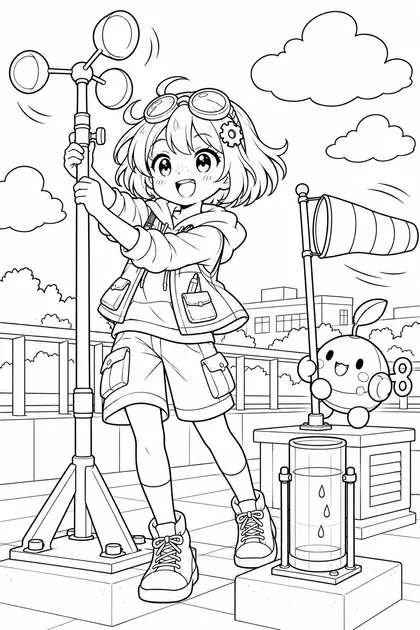
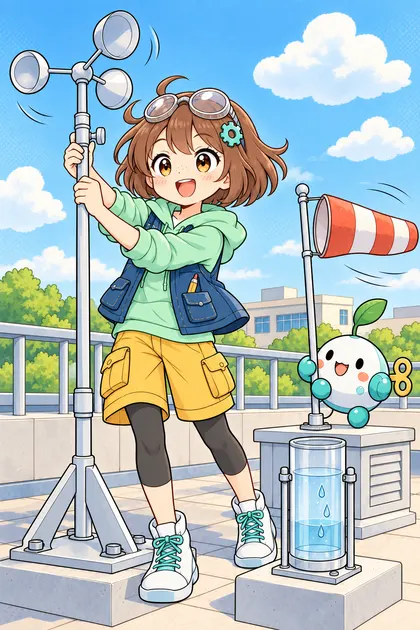
FAQ
Which page should we start with?
The seed germination, cup phone, paper airplane and weather pages are easy to prepare. Activities with balloons, vinegar and soapy water need more adult attention, so try them after you have done one or two of the easier ones.
Do I need to buy special materials?
Almost everything is already at home: paper cups, string, paper towels, a clear cup, paper, balloons, straws, dish soap, vinegar and baking soda. That is the whole list, and each activity above names what it needs.
What if the result is different from the guess?
Have the child record it just as it was. A result that differs from the guess is something new learned, and asking why it was different is the starting point for the next activity.
May we copy every experiment on the pages?
No. This guide does not cover experiments that need fire, heat, electricity or chemicals, or small parts like magnets that are easy to swallow. Use the pages for coloring and talking, and only do hands-on activities that an adult has checked for safety.
Can a three-year-old take part?
Observation activities are fine. Looking at seeds every day or watching bubbles pop is about right, and for activities with balloons or vinegar the adult does everything while the child only watches.