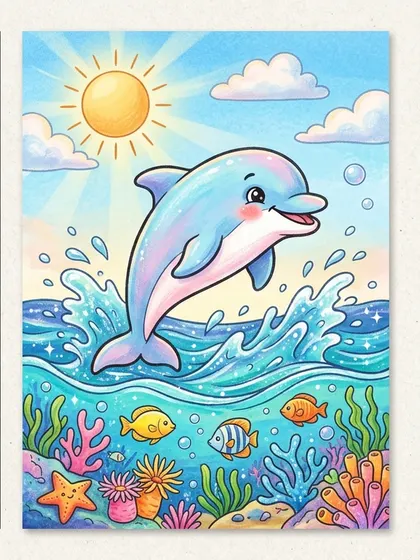
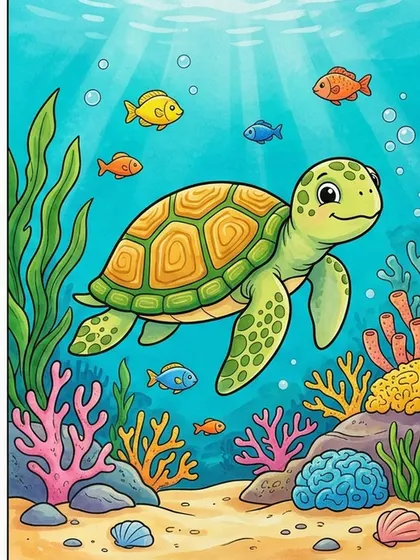
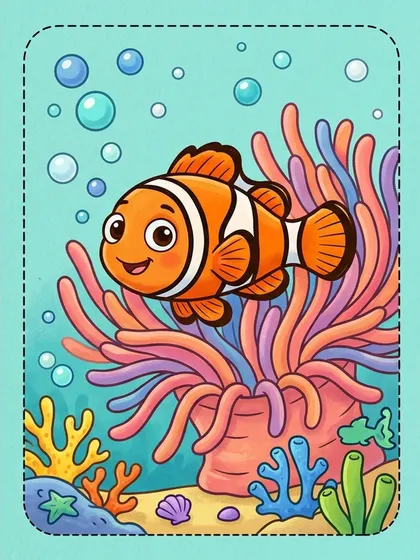
The week at a glance
You will need eight sea animal pages (dolphin, sea turtle, clownfish, seahorse, crab, starfish, octopus and anglerfish), large sheets or a paper roll in light blue, teal and dark blue, a sheet of sand-colored paper, masking tape, glue and round-tipped scissors. Hand the eight animals around as needed. Two or three children coloring the same animal is fine.
- Monday, 30 minutes: guess animals from clues, then color the first page
- Tuesday, 30 minutes: sort the animals into three habitat zones
- Wednesday, 30 minutes: sort by body shape and count legs, then color a second page
- Thursday, 40 minutes: build the ocean wall and put the animals on it
- Friday, 30 minutes: hidden-animal riddle gallery
Monday: guess from clues, then color
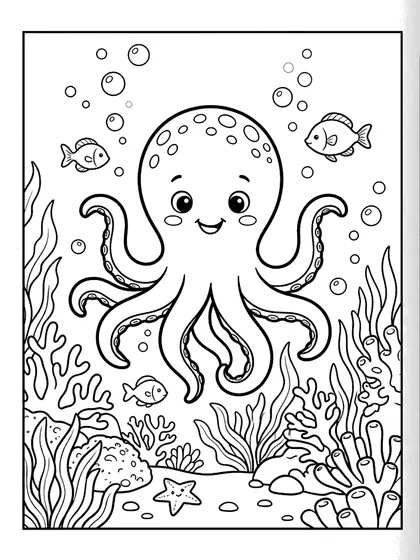
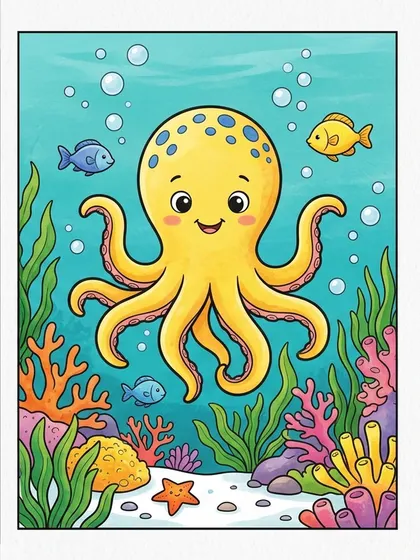
Give clues before you show any picture. “It has eight arms. Who is it?” “It leaps high out of the water.” “It lives among sea anemones.” After each guess, show the matching page and stick up a name card. Introducing all eight takes about ten minutes.
Color the first page for only 15 minutes. Say, “Today we color the big areas first. You can do the small parts on Thursday.” A time limit keeps one page from swallowing the whole week. Use the last five minutes to say the animal’s name aloud and write it on the back of the page.
Tuesday: sort by where they live
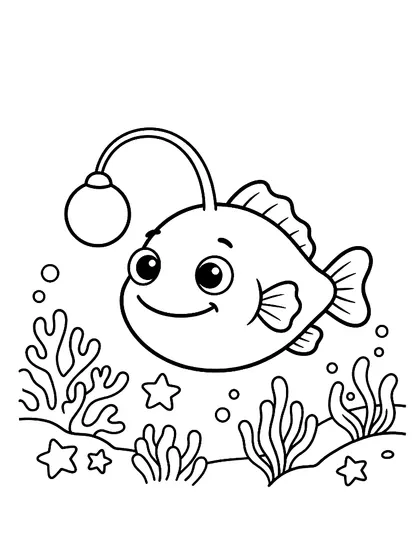
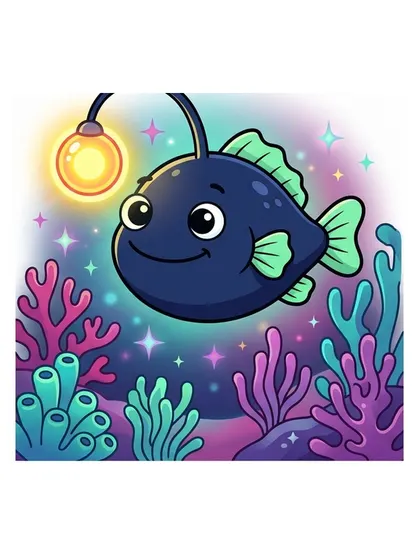
Divide a big sheet into three zones: near the surface at the top, among coral and seaweed in the middle, and deep and dark at the bottom. Dolphins and sea turtles breathe air, so they must come up to the surface. Clownfish live among sea anemones on coral reefs, and seahorses stay among seaweed and coral. Crabs and starfish move along the bottom, and octopuses are known to hide in rock crevices. Some anglerfish live in the deep sea, where almost no sunlight reaches.
Useful teacher questions: “Does this animal need to come up to breathe?” “Is it bright or dark where it lives?” Many sea animals move between several depths, so ask for “where you would most often find it.” If a child puts an animal in a different zone, listen to the reason first. Spend the time on the reasons, not on getting every answer right.
Wednesday: sort by shape and count legs
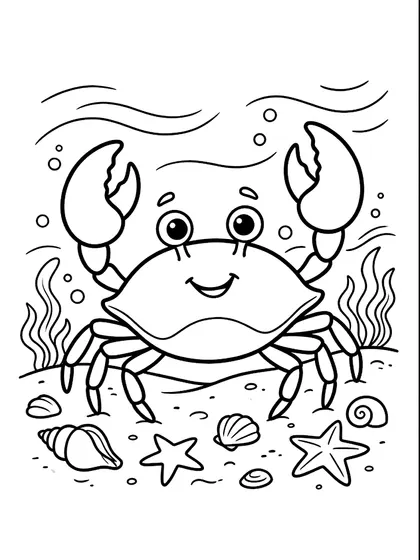
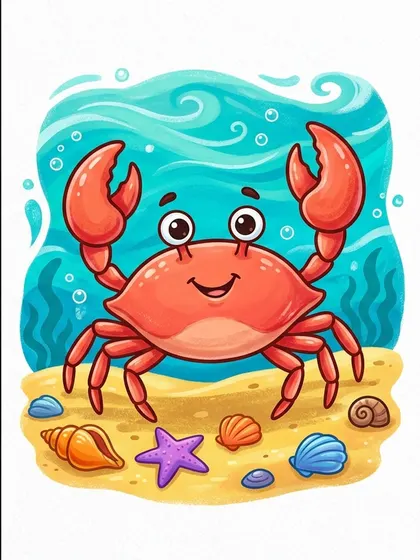
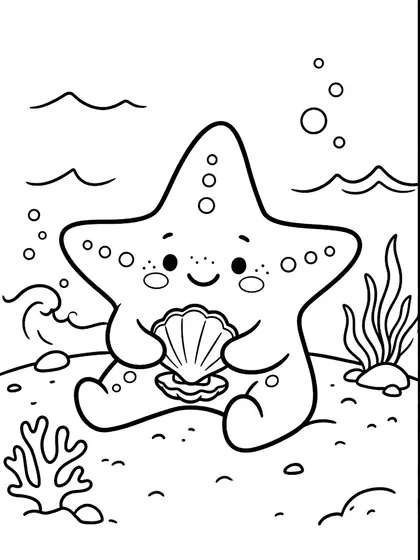
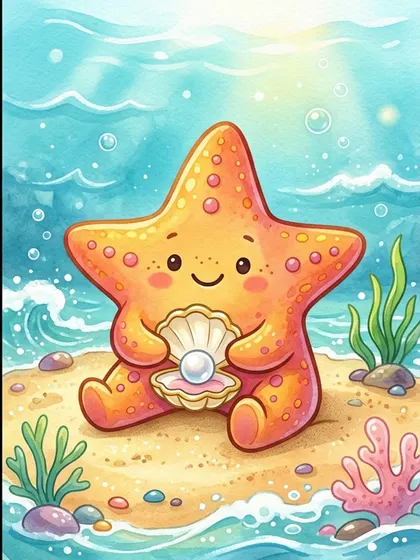
Today’s sort is by body shape. Point to the octopus’s arms one by one and count eight, then count the arms of the starfish. Many starfish have five. Crabs are known to have ten legs counting the claws, but the cartoon crab may be drawn with fewer, so check a picture book or a photo together. Stick a dot sticker beside each page for every number counted.
- Animals with arms or legs: octopus, crab, starfish
- Animals with fins: dolphin, clownfish, seahorse
- Animals with a hard shell: crab, sea turtle
- An animal that can curl its tail: seahorse
Thursday: build the ocean wall
Tape big sheets on the wall from top to bottom in light blue, teal and dark blue. Make a sand mound from sand-colored paper at the bottom of the teal zone so the crab and starfish have somewhere to sit. Cut each colored animal out about one centimeter from the edge and stick it in its zone. For three-year-olds, the teacher does the cutting.
Fill the background with seaweed cut from long green strips, bubbles made from paper circles or stickers, and wave bands of blue paper. Finally, write a large name card for each animal. Children age five and up write their own, and three-year-olds read aloud a card the teacher wrote.
Friday: hidden-animal riddle gallery
Cover each animal on the wall with a sticky note. Each child gives three clues about their animal: where it lives, what shape it has and how it moves. For example, “I walk sideways on the sandy bottom. I have claws. Who am I?” When friends guess it, peel the note off to check. Ask, “What made you think of that?” to connect the clues back to the habitat zones.
End with one story children like, such as the fact that the male seahorse carries the eggs. Use only facts you are sure of.
Adjusting for age
- Age 3: focus on guessing names, coloring and putting animals on the wall. Use only two zones, near the surface and deep sea, and give one clue for the riddle.
- Age 5: do the three-zone sort and the leg counting, with two clues for the riddle.
- Age 7: write the animal’s name and habitat as sentences on an information card, and write all three riddle clues independently.
Running short, running over, and common mistakes
- If you cannot use the whole week, do four days (Monday, Tuesday, Thursday, Friday) and fold Wednesday into Tuesday.
- Children who finish early can cut out seaweed and bubbles for the background.
- One page can easily eat the whole week. Split the coloring into two 15-minute blocks, Monday and Wednesday.
- Gluing straight onto the wall curls the pages and can damage the paper. Masking tape lets you move animals between zones.
- Turning the sort into a test makes children go quiet. Praise a child who explains a reason, even a wrong one.
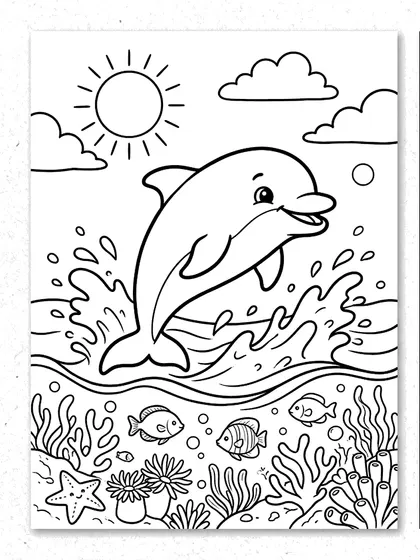
Pages used in this article
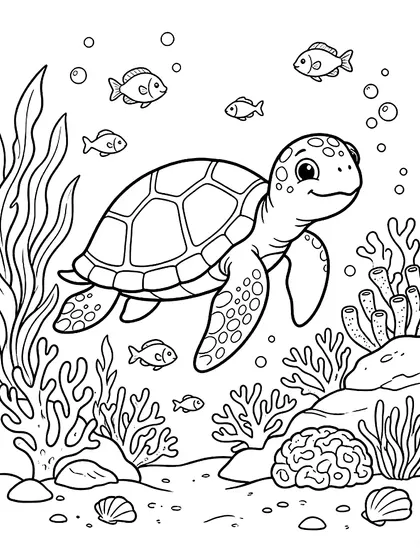
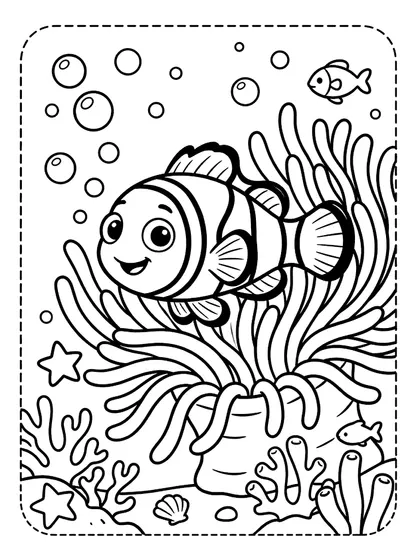
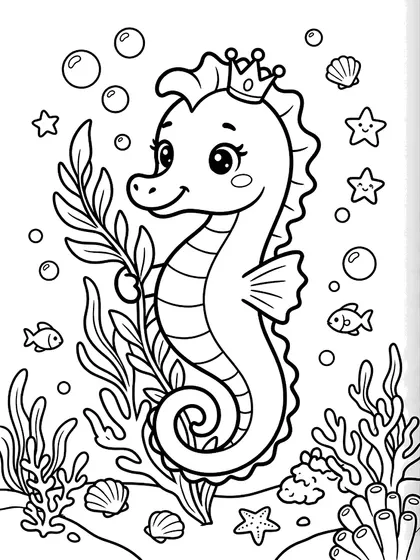
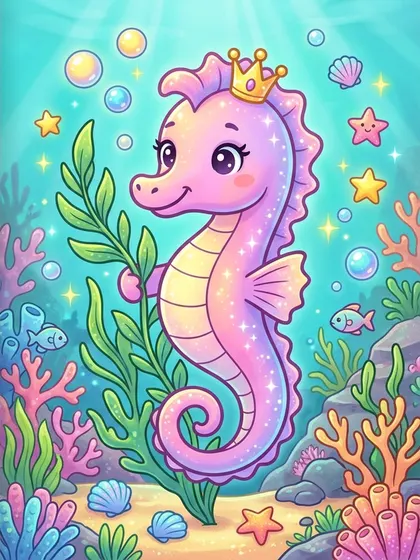
FAQ
How many sea animal pages are there?
The sea animal series has 40, including octopus, sea turtle, whales, dolphin, crab and seahorse, each as a color reference plus black-and-white line art. Eight is plenty for this unit.
Is a dolphin a fish?
No. A dolphin is a mammal that breathes air, which is why it surfaces to breathe. That makes it a good talking point for the habitat sort on Tuesday.
Which zone is correct if an animal lives in several places?
Many sea animals move between depths. Rather than one right answer, ask children to choose where they would most often find it and explain why.
What if I have no wall space?
Use one side of a big cardboard box, or stand a folding screen of thick card on a table. Divide it into three horizontal bands in the same way.