The 50-minute plan and what you need
- Materials: pages of a fire engine, ambulance, police car and school bus plus one or two car-scene pages, crayons or colored pencils, white masking tape, a signal stick (red on one side, green on the other) and eight to ten chairs.
- Warm-up (5 min): make a quiet “nee-naw” siren sound and ask which vehicle makes it. Then ask, “What should we do when we hear it?” and listen to the children’s ideas first.
- Coloring (20 min): children color the vehicle with the color reference beside them. Walk around asking, “When does this vehicle go out?” and “What do the people inside do?”
- Rule matching (10 min): place one rule card under each colored page.
- Classroom road game (10 min): on a taped road, play the crosswalk game, the siren game and the seat-belt game in turn.
- Wrap-up (5 min): each child finishes the sentence “Today I will remember to…” and the lesson ends.
Matching each page to one rule
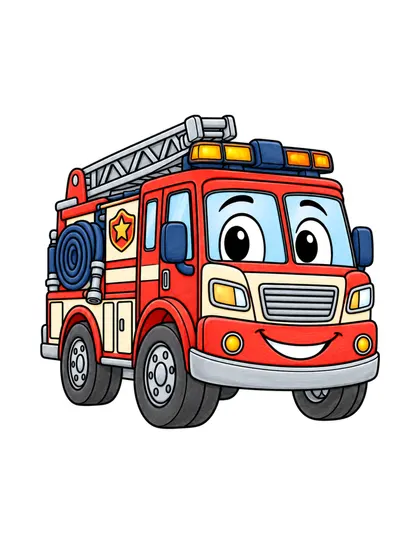
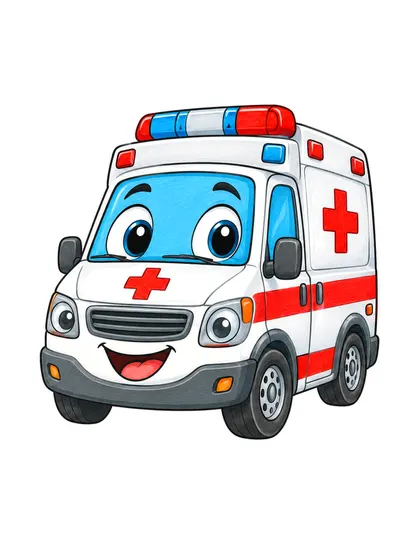
- Fire engine and ambulance pages + the siren rule: when you hear a siren, stop walking and step to the side of the road. Clearing the way is how we help.
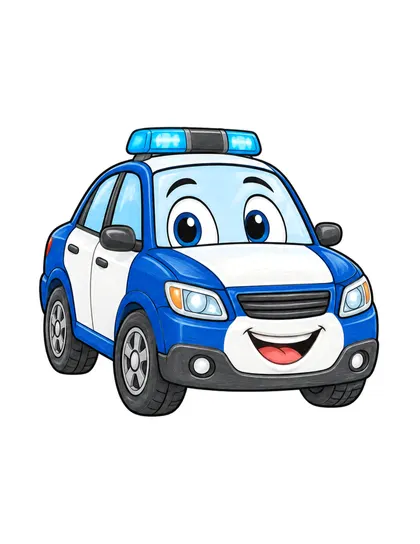
- Police car page + the crosswalk rule: stop before you cross, look left and right, raise a hand, and cross once you see the cars have stopped. Add that police officers help people follow the traffic rules.
- School bus page + the getting-off rule: stand up only after the bus has fully stopped, and after you get off, do not walk straight across in front of or behind the bus, because the driver cannot see well right in front of or behind it.
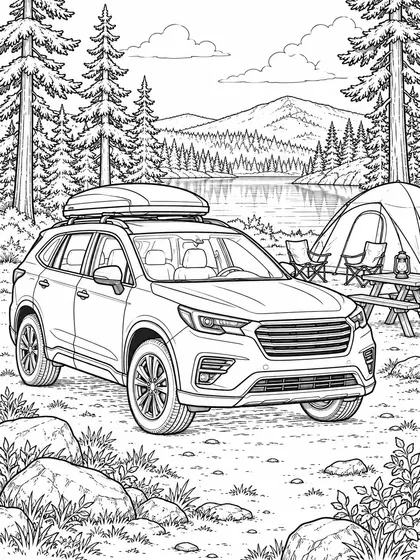
- Family SUV campsite page + the seat-belt rule: put on your seat belt first thing when you get in the car, in the back seat too, and use a car seat that fits your body.
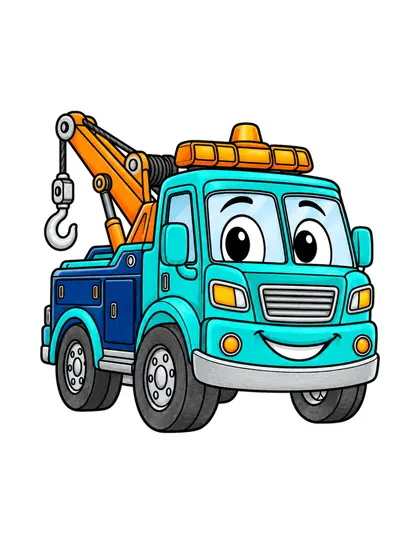
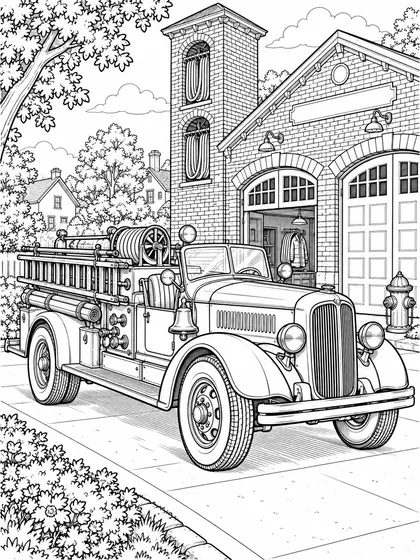
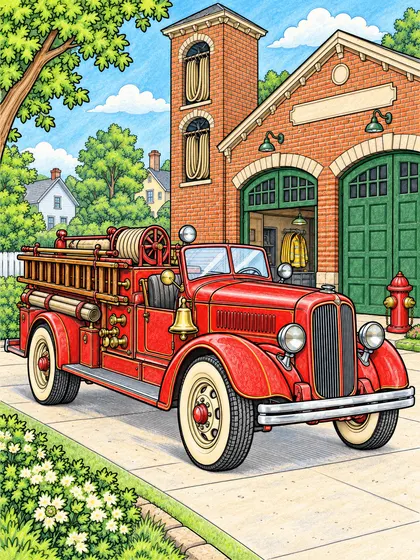
- The tow truck page and the vintage fire engine scene are extras for spare time. They give you questions such as “Which vehicle helps a car that has broken down?”
Build a classroom road with a crosswalk
Tape two long lines on the floor to make a road, then tape several white strips across it side by side for a crosswalk. Stand with the signal stick: red means stop, green means you may cross.
Turn the crossing steps into a chant, which is easier to remember: “Stop, look, hand up, cross.” Always add that even on a green light you check that the cars are really stopping. One child can be the driver and slowly push a chair toward the crosswalk to show “wait when a car comes.” At first you hold the signal; once the children know the routine, a child can take over as signal keeper.
Siren game: stop and step aside
While the children walk along the taped road, make a low “nee-naw” sound. Everyone freezes and steps one pace off the road. You, or one child, carry the ambulance page slowly down the middle. When it has passed, say, “Now we can walk again,” and the game continues.
Explain that someone inside an ambulance may need to reach a hospital quickly, so making room helps that person. On a real road, people on foot move well back onto the sidewalk, and an adult driving a car gives way. After three or four rounds, let a child play the ambulance.
Chair-bus game: seat belts and getting off safely
Set two rows of chairs, one behind the other, to make a school bus. The child driver asks, “Is everyone buckled?” and passengers make a “click” sound and mime fastening the belt. The bus leaves only after that check. On arrival, wait until the bus has completely stopped, then get off in a line and wait on the sidewalk until the bus has driven away.
Practice staying seated while the bus is moving, too. For car seats, a short reminder is enough: use one that fits the child’s height and body, and an adult checks it.
Adjusting for age
- Age 3: only two rules, “stop on red” and “step aside for a siren.” Children color just the large areas and repeat your chant.
- Age 5: all four rules. Stick the rule cards under the pages and let children take turns holding the signal stick.
- Age 7: children write the rule sentences themselves and answer “Why?” In groups they can draw a map of the classroom road and mark places they think are dangerous.
Common mistakes and cautions
- Do not show frightening accident stories or photos. Teach rules as “this keeps us safe.”
- Do not pack in too many rules. Beyond four, children find it hard to remember them.
- Children walk, not run, on the classroom road. Leave plenty of space between chairs in the bus game.
- Make the siren sound with a low voice. A loud one can startle some children.
- The vehicles on the pages are cartoon characters. Follow up with real crosswalk practice on a field trip with a teacher or guardian.
If you have extra time, or too little
With extra time, have children draw a crosswalk and traffic light from their own neighborhood on the back of the page. Also practice, out loud, when to call the emergency number: for a fire, a serious injury or sudden illness, and a different number for police help. In Korea these are 119 and 112; use your local numbers elsewhere. Remind them never to make prank calls.
If time is short, color only one page and move either the siren game or the chair-bus game to the next day for five minutes. Repeating the same game briefly over several days can make the rules feel more familiar.
Pages used in this article
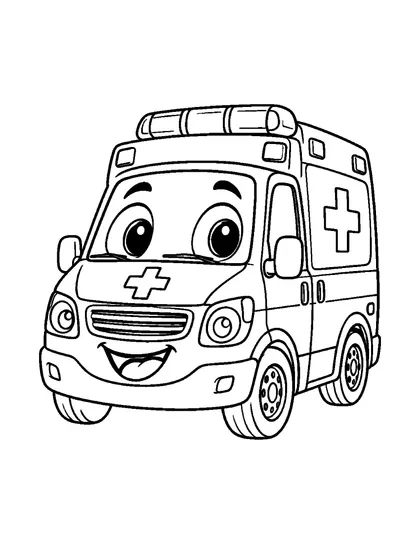
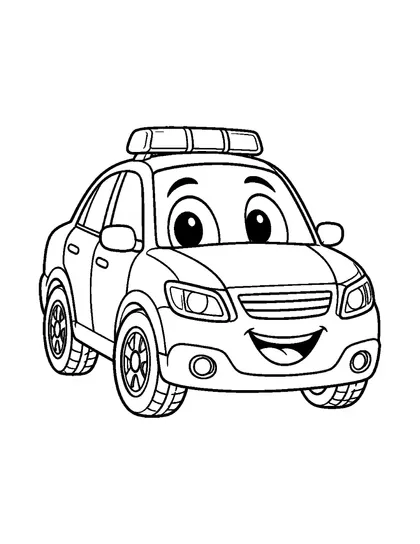
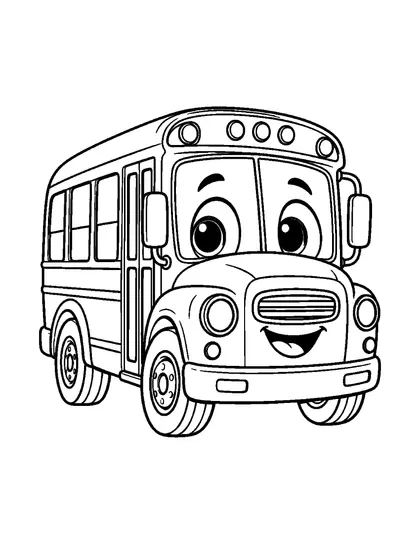

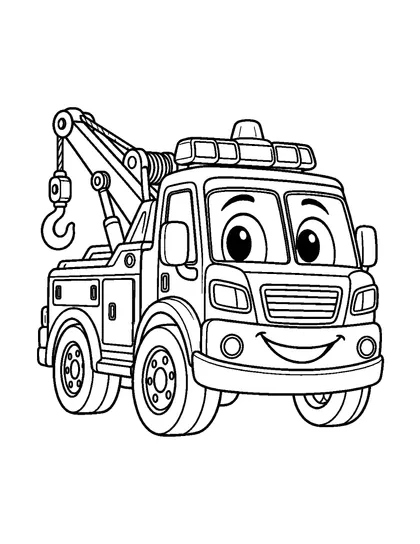

FAQ
Which car pages should I choose?
The fire engine, ambulance, police car and school bus are in the truck and vehicle series. The car series has a family SUV campsite scene and a vintage fire engine scene. For seat belt talk, an ordinary passenger car scene fits best.
From what age can I use this?
From age 3, cut it down to two or three rules and keep it playful. From age 5 you can add rule cards and ask children to explain why.
How do I practice at a real crosswalk?
After learning through play in the classroom, take small groups to a crosswalk near your school with a teacher walking along. Saying the same chant there makes the link easy.
How do I prepare the pages?
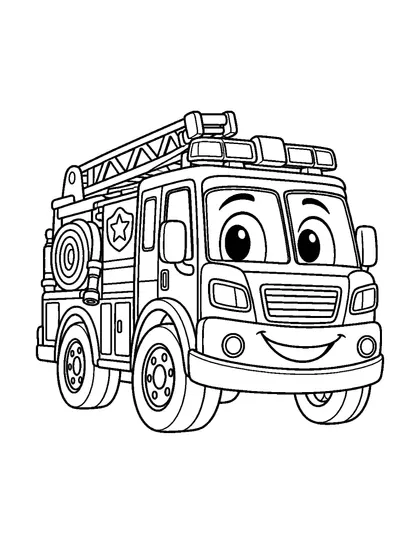
Download each page as a PNG and print it on A4. The color reference and the black-and-white line art come as a pair, so show the reference on a screen or print one copy for the middle of the table.
Is one lesson enough?
Children rarely memorize rules after hearing them once. Play four rules in one session, then say the chant briefly before walks or arrival times over the next few days.