

First, guess at the reason without judging
When a child resists coloring, it helps to notice when they stop instead of asking why. This guide does not evaluate children or make medical judgments; it only offers play ideas you can try at home.
- If the child stops when a line is crossed: they may be worried about not coloring well.
- If they stop at once: the page may have looked too big or too busy.
- If they shake out a hand and get up halfway: their hand may be tired, or another game sounds better.
- If adults often say 'color neatly' or 'stay straight': coloring may have started to feel like being graded.
Idea 1. Say 'outside the lines is fine' before you start
Say it before the first stroke: 'It's okay to go outside the lines. That part becomes a cloud.' One sentence takes a surprising amount of pressure off.
Showing it works better than saying it. Go outside the line on purpose, once, and laugh: 'Oh, I went over. Now it's a meadow!' The child sees that it is not a mistake. Keep the eraser out of sight at first.
Idea 2. Color only one part today
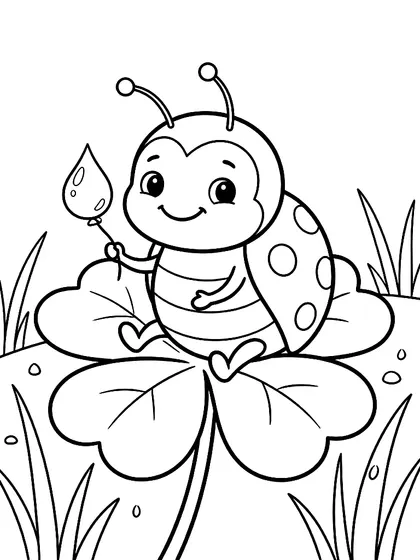
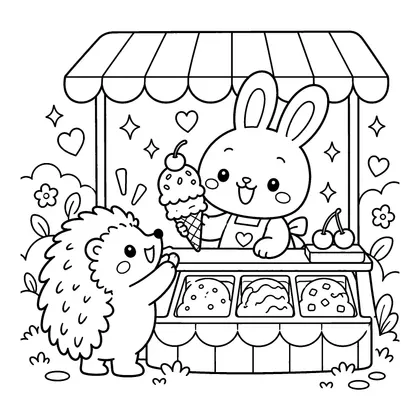
Remove the pressure of finishing the whole page. On the bunny ice cream shop, color just one ice cream. On the hamster bakery, one cupcake. On the ladybug Laly, one spot on the back counts as a complete job.
Say, 'Let's color just this one, and if you feel like it we'll color more tomorrow,' and leave the page out on the table. If the child comes back a few days later and colors one more area, that is plenty.
Idea 3. Color together, in turns or with two copies
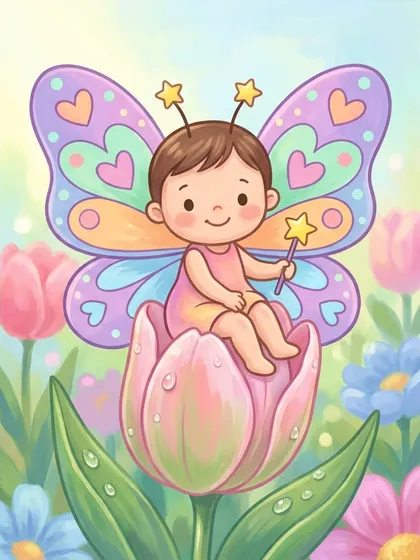
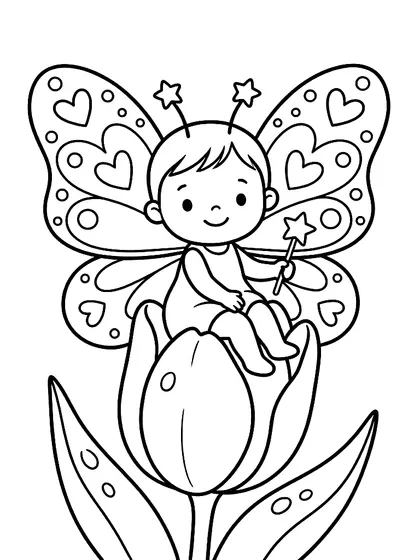
When a parent colors alongside, coloring becomes a game you do together rather than homework to do alone. On the butterfly page, the child can color one wing and the parent the other. The two wings come out different, and talking about the difference is the fun part.
You can also print two copies and color side by side. Show only what slow, big, happy coloring looks like, and say little. When the child says 'look at this', that is the time to respond.
Idea 4. Let the child choose the page
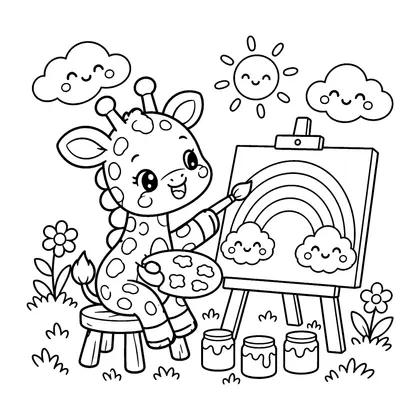
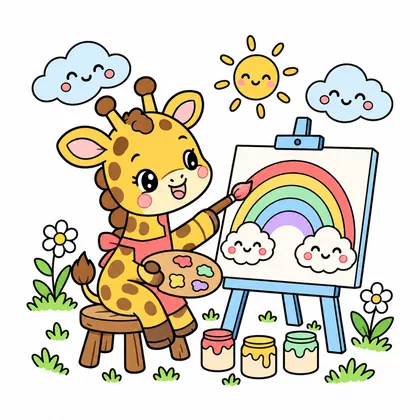
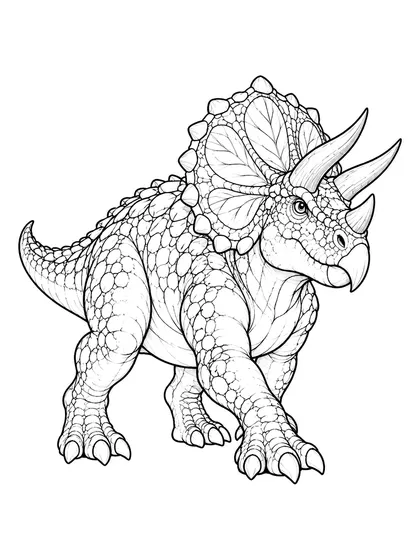
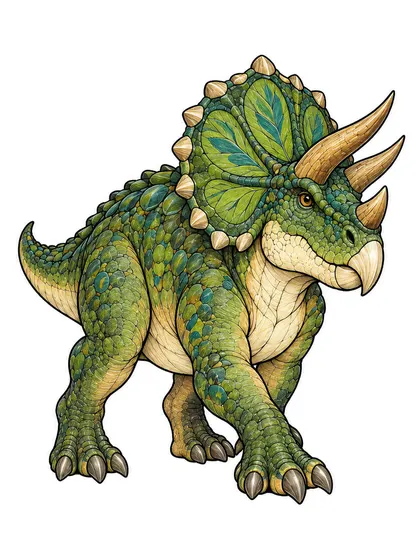
Spread out two or three pages and let the child pick. Choosing gives a reason to start. For a dinosaur fan, offer the Triverda triceratops; for a child curious about bugs, the butterfly or ladybug. The page of the giraffe painting a rainbow gives a feeling that there is no 'right' color, which suits a day when colors can be anything.
Idea 5. Change the tool and the place
- Switch to thick crayons. Crossing the line shows less and areas fill quickly.
- Set a five-minute sand timer and say, 'Just until the sand runs out.' Knowing the end in advance helps.
- Instead of the table, spread big paper on the floor, or tape the page to a wall and let the child color standing up.
- Create a relaxed mood with a snack nearby or favorite music.
Idea 6. Change how you praise
'You colored it so nicely' can make a child fear the next page won't be nice. Describe what you see instead: 'You used a lot of blue.' 'You mixed two colors here.' 'I wonder what flavor this ice cream is.'
Skip comparisons with siblings and friends. Don't score the result; show interest in the process and the colors chosen. That is the heart of it.
When the child wants to stop
Don't make them finish. Say, 'You got this far. You can come back to it or not,' and put the page in a 'finish later' box. After a few days off, offer a different page once or twice more. If there is still no interest, let the child meet the pages another way, such as talking about the picture or cutting and pasting.
What to expect at different ages
- Around age 3: scribble-like coloring is enough. Sitting for a few minutes is already a success.
- Around age 5: children begin to notice the inside of the lines. Let them taste the satisfaction of finishing one area.
- Around age 7: the wish to color perfectly sometimes makes children quit. Instead of an eraser, show them how to change colors and cover over.
Pages used in this article


FAQ
My child gets upset and quits when they go outside the lines. What should I do?
Say 'outside the lines is fine' before starting, then go over a line on purpose yourself and laugh, 'Now it's a meadow.' Switching to thick crayons also helps.
How long should a child sit and color?
There is no set rule. Three to five minutes is plenty at first, and a timer or sand timer that shows the end in advance makes starting easier. You do not need to extend the time until the child asks for more.
My child compares themselves to a sibling who colors well.
Give them different pages, or talk about how the colors differ instead of who did better. A cooperative game helps too, such as one child coloring the front and the other the back.
Would online coloring help?
Online coloring is supported only on a PC screen with a mouse; phones and tablets are not supported yet. It feels different from paper, so the pressure may be lighter or heavier depending on the child. Follow whichever the child shows interest in.