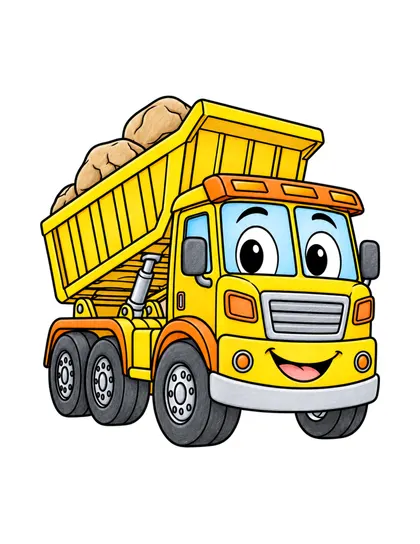
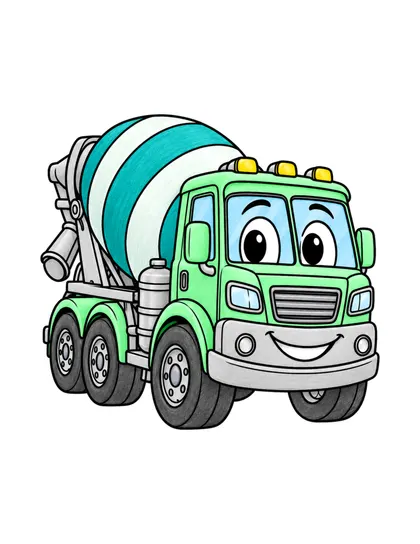
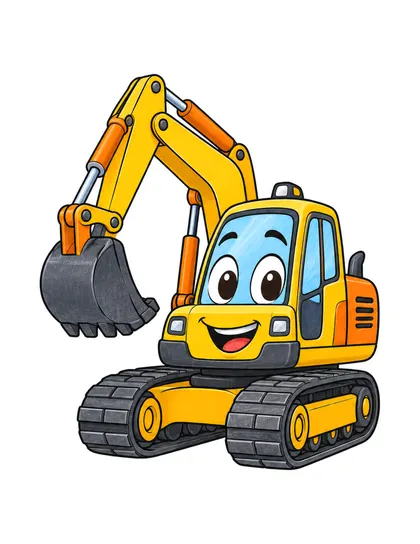
The two-day plan at a glance
- Materials: six pages (dump truck, concrete mixer, excavator, bulldozer, crane truck and bucket truck), two pages per group, crayons, scissors for ages 5 and up, glue, one large sheet of paper, matching cards (vehicle names and jobs) and about twenty crumpled newspaper balls.
- Day 1 (45 min): body-play warm-up 10 min, then coloring 20 min, matching-card game 10 min, tidy-up 5 min.
- Day 2 (45 min): divide the site 10 min, then cut and glue the colored vehicles 20 min, make up a construction story 10 min, tidy-up 5 min.
- Opening questions: “What do we do if the ground is bumpy when we build a road?” “Which vehicle do we need to lift something heavy up high?”
What each of the six vehicles does
- Dump truck: carries soil, sand and stones, then tips its bed up to pour them out. Copy the tilting bed with your arms.
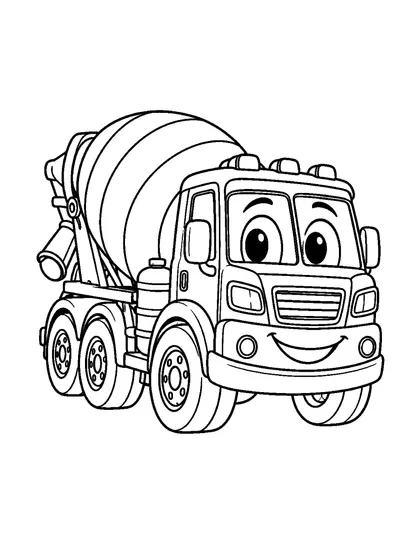
- Concrete mixer: carries concrete that has not hardened yet in its drum and takes it to the site. The drum keeps turning on the way so the concrete does not set.
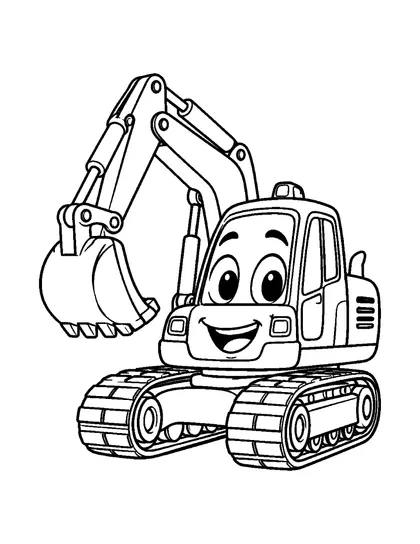
- Excavator: digs the ground with the bucket at the end of its long arm.
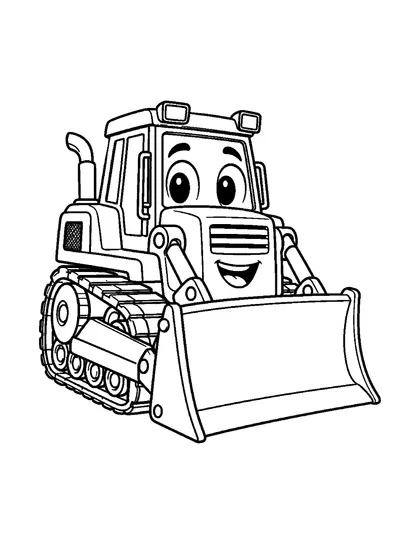
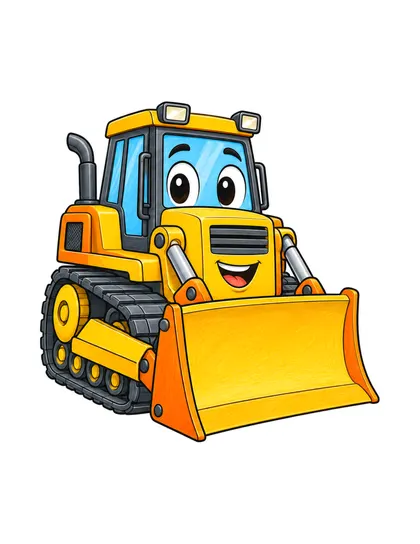
- Bulldozer: pushes soil with the wide blade at the front to level bumpy ground.
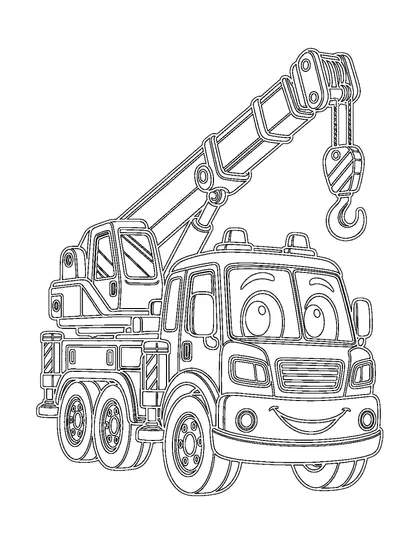
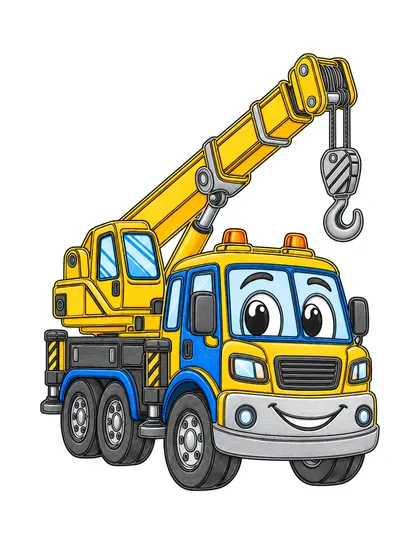
- Crane truck: lifts heavy things high with its long arm.
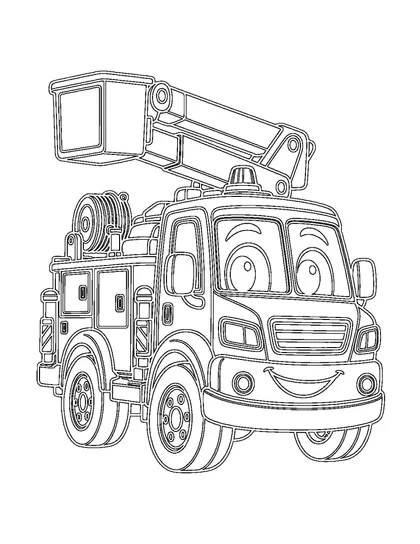
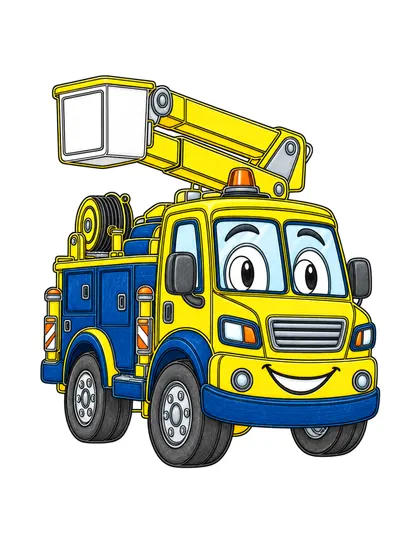
- Bucket truck: raises a basket high so people can work up in the air.
Day 1 warm-up: excavator and dump truck with newspaper balls
Crumpled newspaper balls are the “soil.” In pairs, one child is the excavator and stretches out a long arm to scoop balls, while the other is the dump truck and holds a box. When the excavator has loaded the box, the dump truck walks to a marked “construction site” spot and tips the box out. Walking, not running, is the rule. Swap roles every minute or two.
After trying it with their bodies, children can find it easier to look for the bed and the arm on the page. Before coloring, ask “Where is the dump truck’s bed?” and let them point.
Day 1 activity: matching cards and “Who am I?”
Line up the colored pages on a table. Each group draws a job card and reads it out; for younger children you read it. They place the card on the matching vehicle. For example, “carries soil and tips it out” belongs to the dump truck and “digs the ground with a shovel on a long arm” to the excavator.
Once they know the cards, switch to “Who am I?” One child secretly picks a page and gives three clues: “I dig the ground. I have a shovel at the end of my arm. What is my name?” If the group guesses before the third clue, everyone claps.
Day 2: build our class construction site
Spread the large paper on the floor and sketch only the big layout in pencil: a road down the middle, one area where the ground is dug, and another where a building will go. Each group takes an area, cuts out the vehicles colored the day before, tries them in place, talks about the order of work, and then glues them down.
Offer a story order to follow, for instance: the excavator digs, the dump truck carries the soil away, the bulldozer levels the ground, the mixer pours concrete, and the crane lifts materials up high. Add in one sentence that real building sites vary in their order of work. At the end, children take turns saying one sentence of “our construction story.”
Adjusting for age
- Age 3: only three vehicles (dump truck, excavator, bulldozer). Color the large areas, let the teacher cut, and let the child glue. Instead of matching cards, copy sounds and motions such as “vroom, scoop it up.”
- Age 5: two vehicles per group. Children cut by themselves and play the matching cards and “Who am I?”
- Age 7: make order cards and glue them in sequence, and write your own clue quizzes. Add a note to each area of the site explaining why that vehicle is needed there.
Common mistakes and cautions
- Asking each child to color all six pages will run out of time. Give each group two and let them introduce them to the others.
- Use blunt-tipped child scissors, and cut for children age 4 and under yourself.
- If you stand the paper up before the glue dries, the pages fall off. Keep it flat on the floor or a big table until dry, then hang it.
- Play the newspaper-ball game at a walk and never throw the balls. Leave wide gaps between groups.
- Real construction sites are dangerous, so say clearly that children must not go near them. If they meet a working vehicle on the street, they watch from far away and stay next to an adult.
If you have extra time, or too little
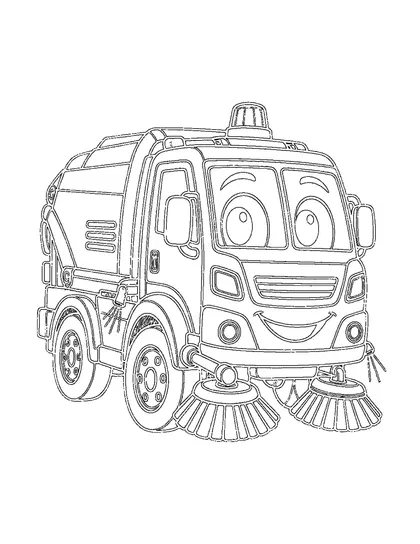
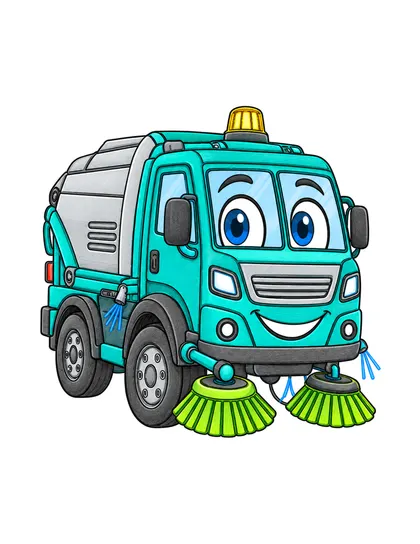
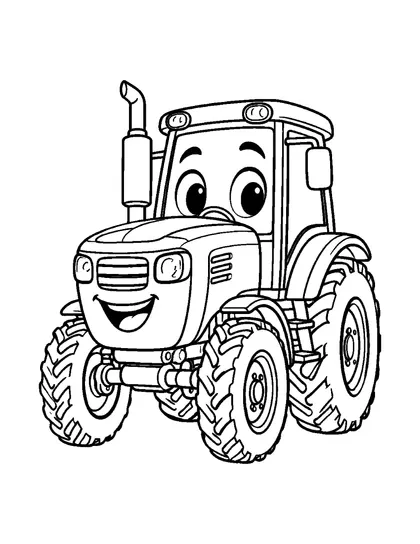
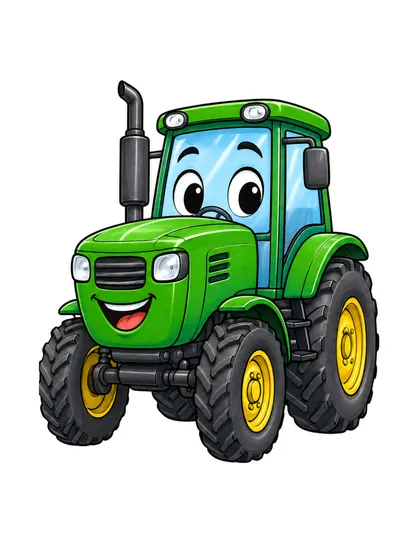
With extra time, fold paper safety helmets and talk about why people wear helmets at construction sites. You can add the street sweeper and farm tractor pages to widen the theme to vehicles that work in town and on farms.
If time is short, split day two into two short sessions and do only the area division and the gluing on the first. For children who are less interested in vehicles, give roles such as site guide, story writer or color chooser so that everyone takes part.
Pages used in this article
FAQ
Which pages should I pick?
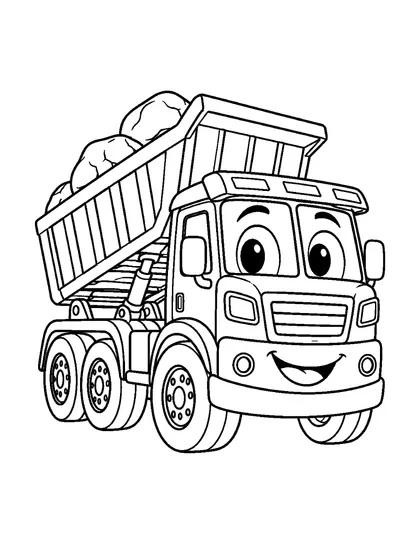
The construction truck group in the truck and vehicle series has a dump truck, concrete mixer, crane truck, excavator, bulldozer and bucket truck. Each page comes as a color reference plus black-and-white line art.
What if I do not have a large sheet of paper?
Tape several sheets of A4 together, or use the back of wrapping paper. You can also lay out newspaper and glue the pages onto that.
How do I show the real size difference between vehicles?
Each vehicle is printed on its own A4 sheet, so sizes are hard to compare. A simple spoken comparison is enough, such as “a dump truck is much bigger than a family car.”
How many children is this good for?
Three groups of four or five children, so twelve to fifteen in all, works well. With a bigger class, add groups and let two groups take the same vehicle.