1. What makes a maze easy or hard
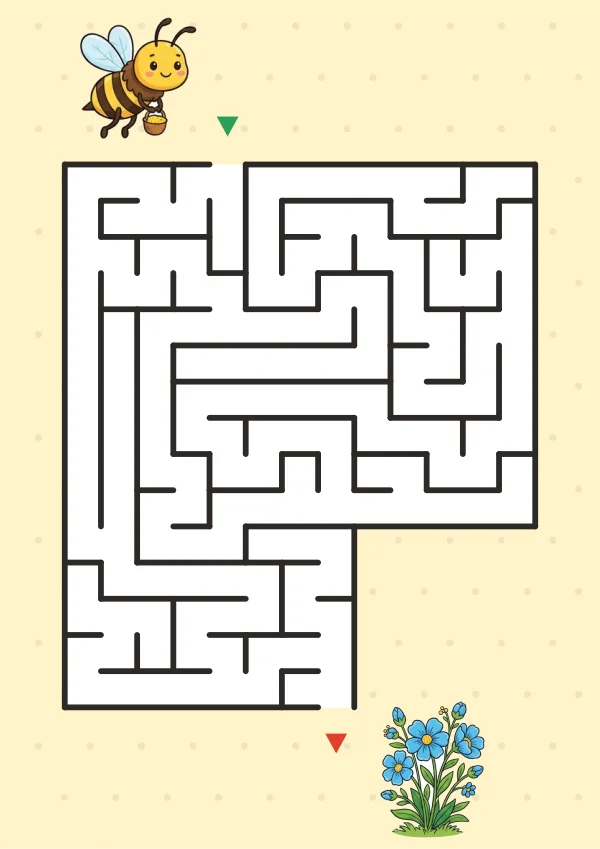
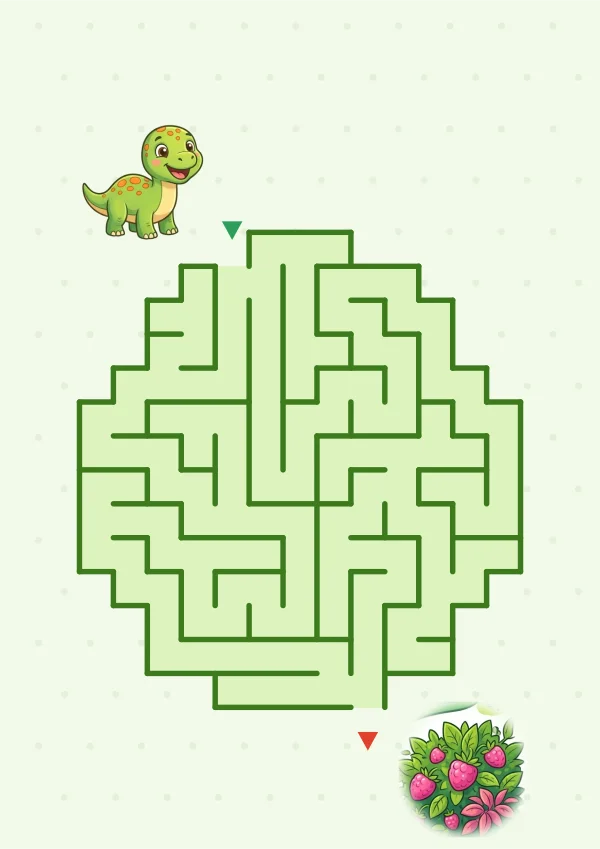
Three things decide how hard a maze is: how many cells it has (its size), how many cells the answer path from start to finish takes, and how many dead ends there are. More cells and more dead ends mean more wrong turns to back out of.
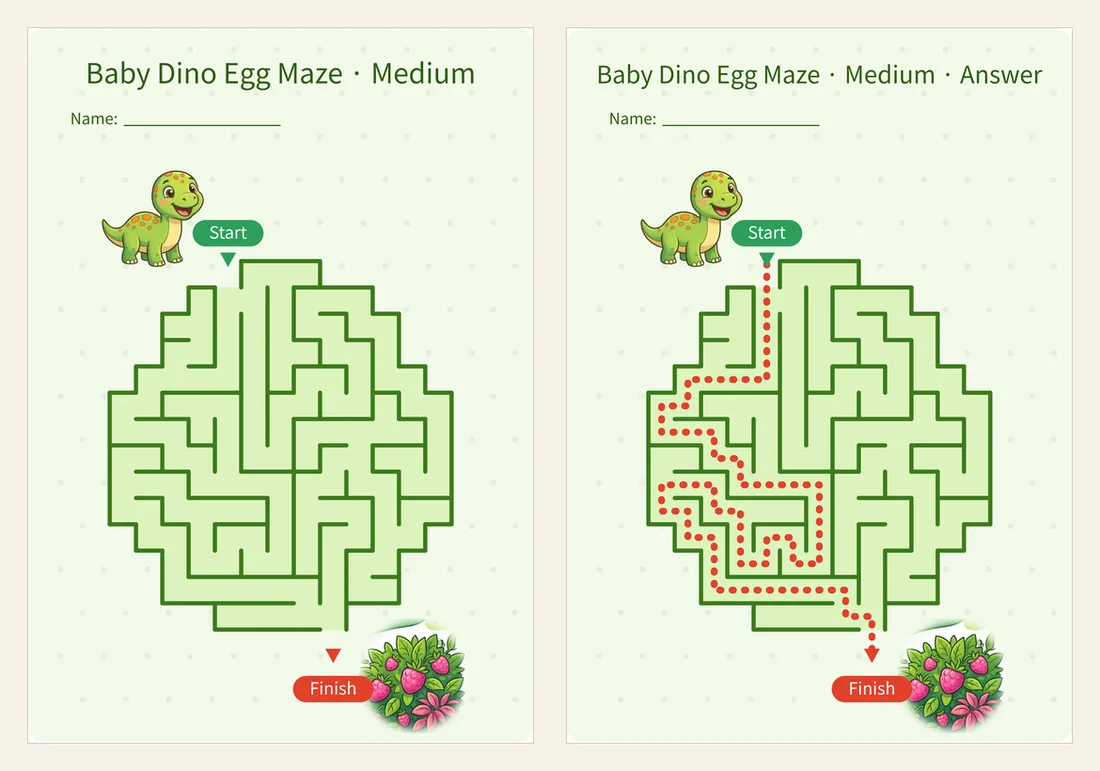
All 21 of our mazes are generated by a computer program. That means every maze can be solved and there is exactly one path from start to finish. The red dotted line on each answer sheet is drawn by the same program along that path.
2. The three levels in numbers
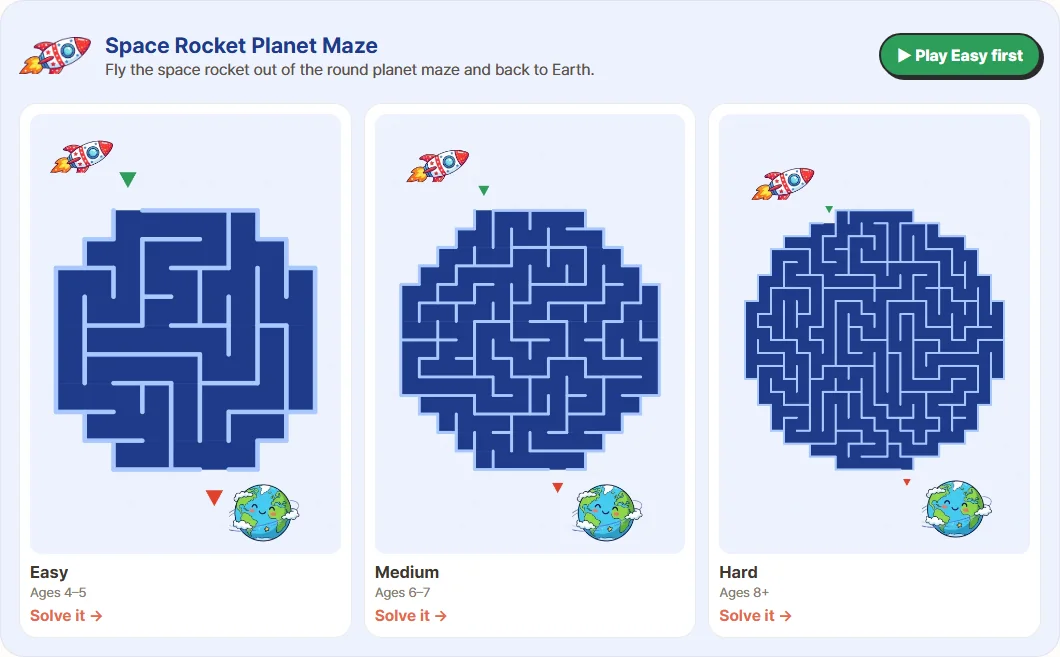
- Easy (ages 4–5): 48 to 69 cells, an answer path of 18 to 27 cells, 6 to 11 dead ends. The cells are big enough for a chunky crayon to stay off the walls.
- Medium (ages 6–7): 104 to 170 cells, a path of 27 to 48 cells, 14 to 22 dead ends. Some junctions need a little looking ahead.
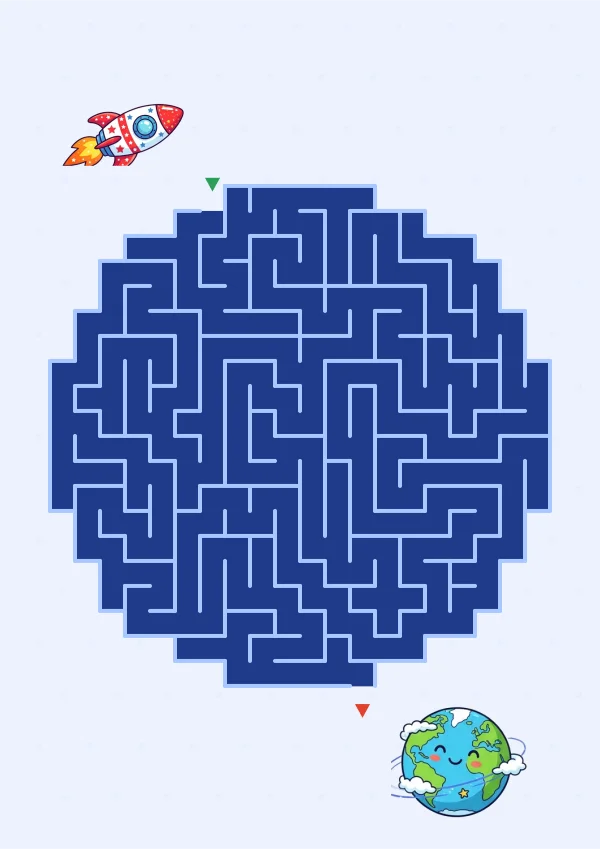
- Hard (ages 8+): 226 to 369 cells, a path of 48 to 113 cells, 29 to 42 dead ends. The cells are small, so a pencil or fine colored pencil works best, and it takes longer to finish.
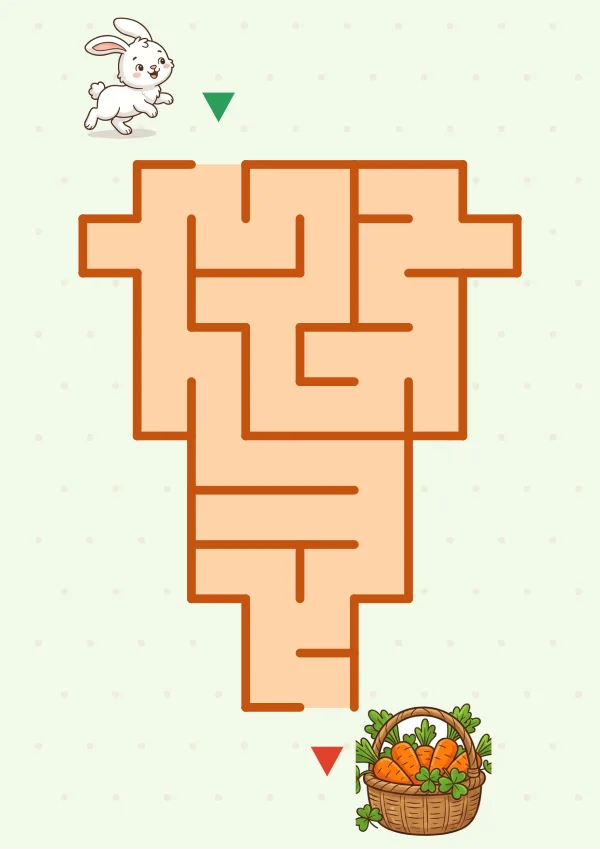
- Shape matters too. In a long, narrow maze like the carrot, the answer path can wind a long way: the Hard Bunny Carrot Maze has 226 cells but an answer path of 111 cells.
3. Choosing a level for your child
- If your child can draw a line with a pencil or crayon, they can start with Easy. That is often around age 4, but look at how comfortable they are drawing lines rather than at age alone.
- For a first maze, start with Easy whatever their age. It helps for the first sheet to be one they can finish.
- Once they finish an Easy maze without help, try Medium in the same theme. If Medium keeps stopping them, one or two more Easy mazes in other themes are fine.
- For siblings or a class with mixed levels, hand out different levels of the same theme. Everyone has the same picture and story to talk about.
4. Printing the question and answer sheets
On each maze page, the “Download question sheet” and “Download answer sheet” buttons sit on the right (below the maze on phones). Both are A4 portrait PNG images with the maze title and a name line at the top. The answer sheet shows the path as a red dotted line.
When you print a downloaded sheet, choose A4 paper and “Fit to page” so the edges are not cut off. To print straight away, the “Print” button on the maze page prints just the maze on screen. If “Show answer” is on, the answer line prints too, so hide the answer before printing a copy for your child.
5. Printing in black and white
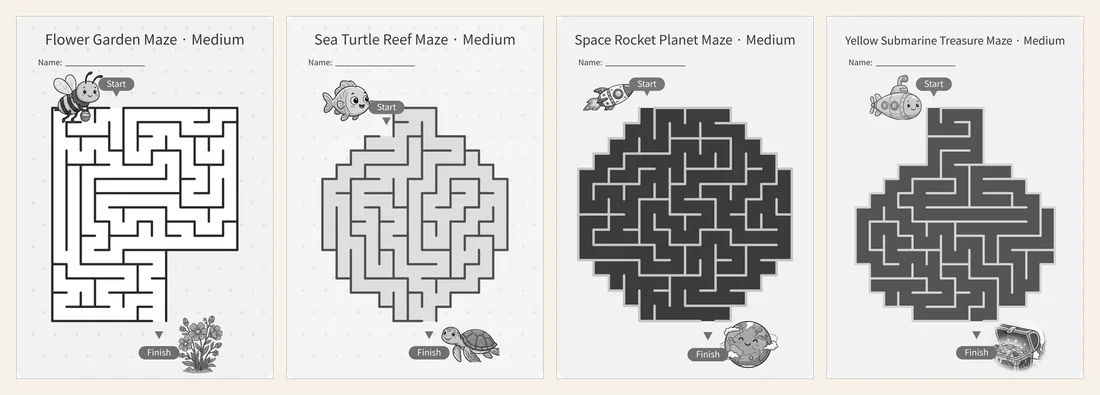
Each theme uses different colors for the path and walls. In black and white those colors become shades of gray: mazes with a light path stay crisp, but mazes with a dark path come out dark all over.
- Best in black and white: the Flower Garden Maze (white path, black walls). The Sea Turtle, Bunny Carrot, Baby Dino Egg and Honeybee Hive mazes also have light paths where pencil lines show clearly.
- Better in color: the Space Rocket Planet and Yellow Submarine Treasure mazes. Their dark blue paths turn deep gray in black and white, which hides pencil lines and uses a lot of toner.
- If you need to draw on a dark path, an opaque tool such as a white or yellow crayon shows up best.
6. When your child gets stuck
- Put the pencil down and follow the path with a finger first. A finger leaves no marks, so it is easy to try one way and then another.
- At a dead end, go back to the last junction and choose the other way. This is the basic method for solving any maze.
- Working backward from the finish also helps. Trace from both ends and meet in the middle.
- Instead of handing over the whole answer sheet, fold it and show only the part near where they are stuck.
- The on-screen version of each maze has a “Hint” button that makes the next few cells sparkle.
7. After the maze: keep going with coloring
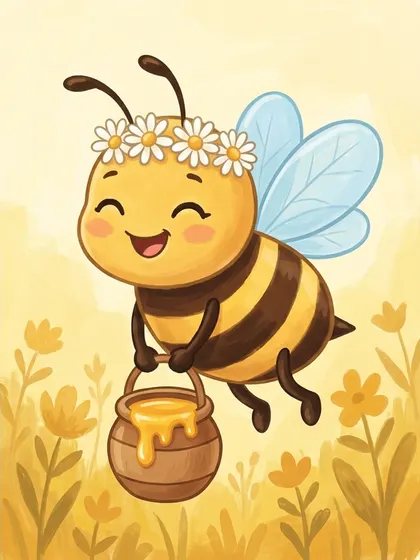
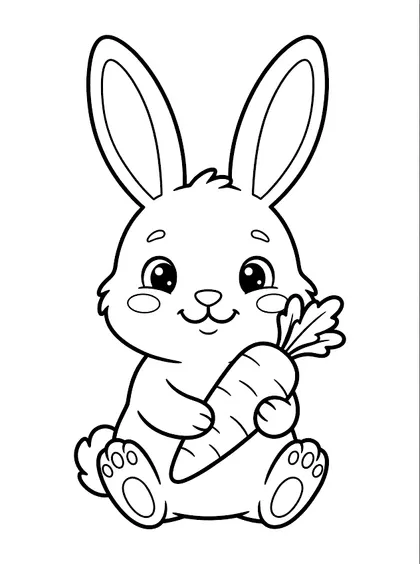
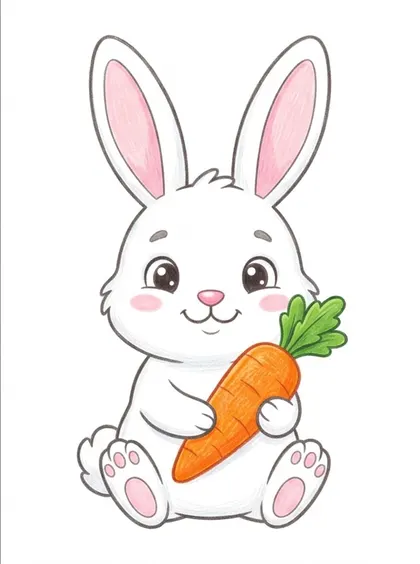
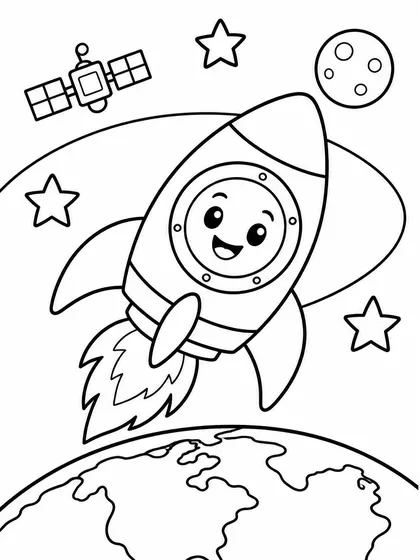
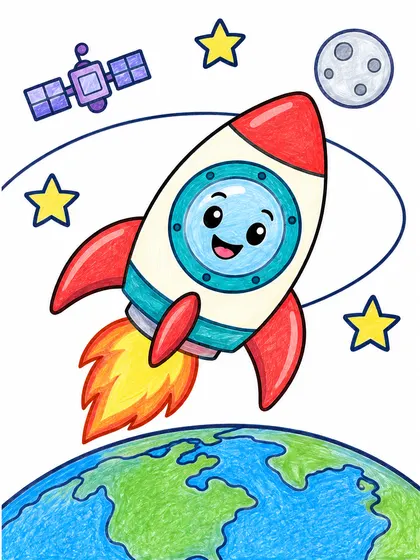
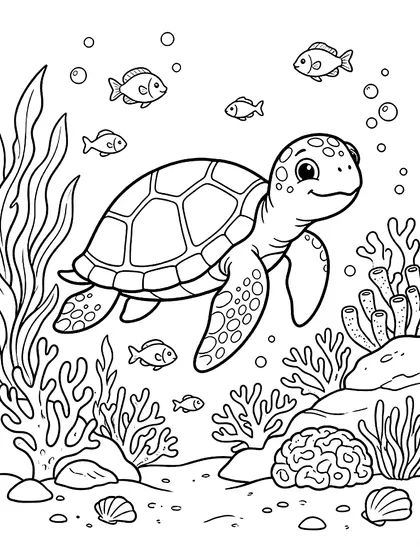
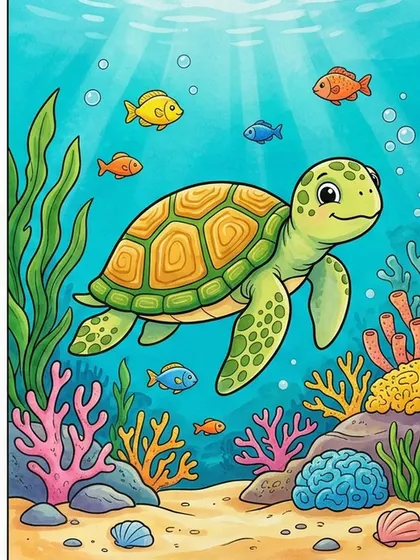
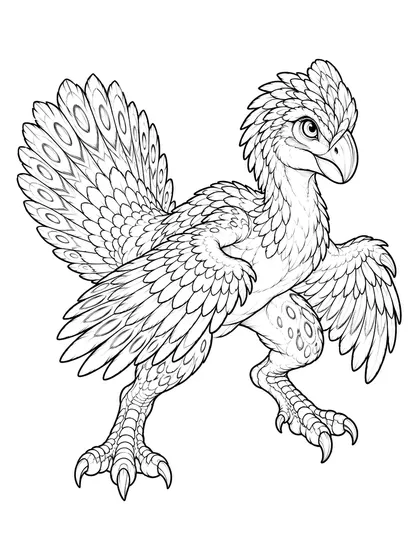
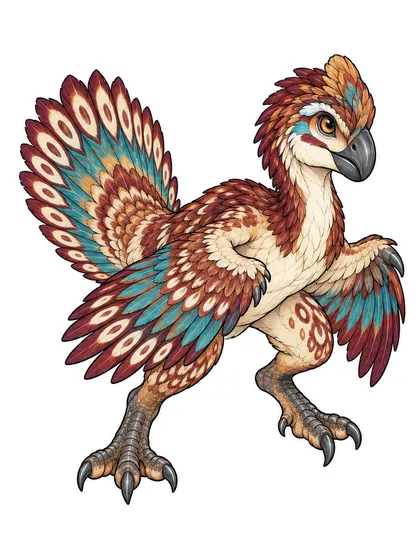
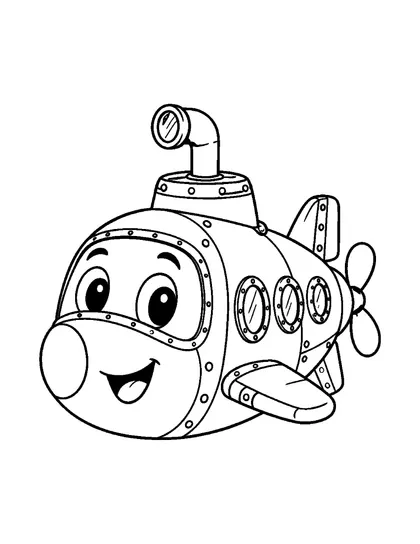
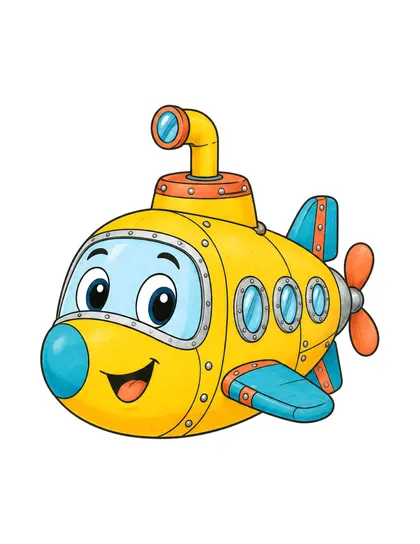
Every maze page links to coloring pages on the same subject: the bee and garden mazes lead to cute animals, the Bunny Carrot Maze to food and vegetables, the Space Rocket to the solar system, the Sea Turtle and Yellow Submarine to sea animals, and the Baby Dino to dinosaurs.
Children can also draw the maze character in the margin, or tell a short story about what happened on the way from start to finish. Coloring pages that go well with the mazes are collected below.
Try the mazes from this guide
Open a maze to download its question and answer sheets, or press Play to solve it with a stylus or finger in a new window.
 Space Rocket Planet MazeHard · Ages 8+
Coloring pages to go with the mazes
FAQ
What age can children start mazes?
Once a child can draw a line with a pencil or crayon, they can try Easy. That is usually around age 4, and tracing the path with a finger is a fine way to begin.
Is there really only one answer?
Yes. The mazes are generated so that every cell connects in a single branching tree, which leaves exactly one path from start to finish. The dotted line on the answer sheet is that path.
Is it free? How many copies can I print?
It is free. Print as many copies as you need at home or in class. Selling the files or reposting them elsewhere is not allowed.
Are the mazes available in Korean too?
Yes. The Korean pages (/maze/) give sheets with Korean titles and labels. The maze paths are the same in both languages.
Will there be more mazes?
We plan to keep adding themes. New mazes appear first on the mazes page (/en/maze/).