The colored page becomes the first scene
In this activity, a group of four children each colors a different princess page, then the group places all the pictures together and builds a story one sentence at a time. A made-up story has no right or wrong plot, so even children who find speaking hard feel little pressure. During the 20 minutes of coloring they naturally think about the princess’s name and where she lives, so by story time they already have something to say.
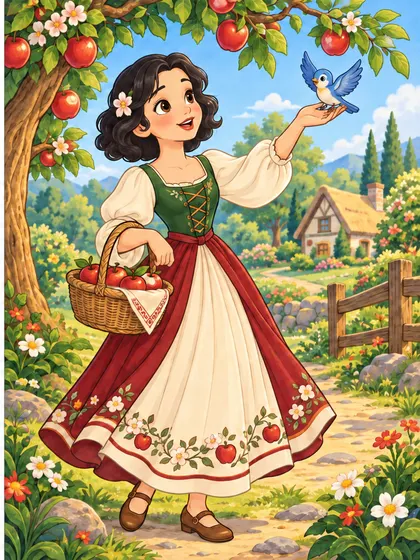
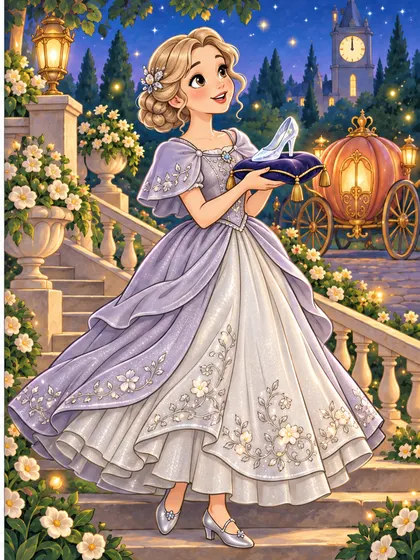
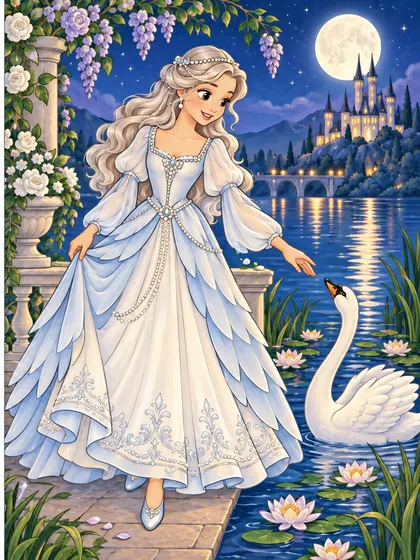
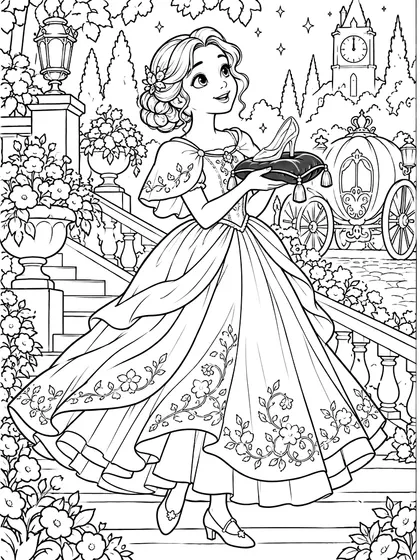
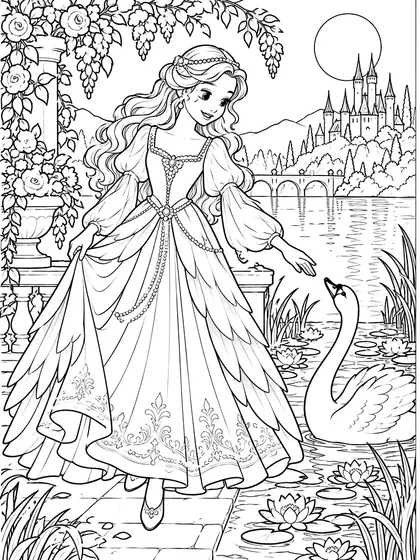
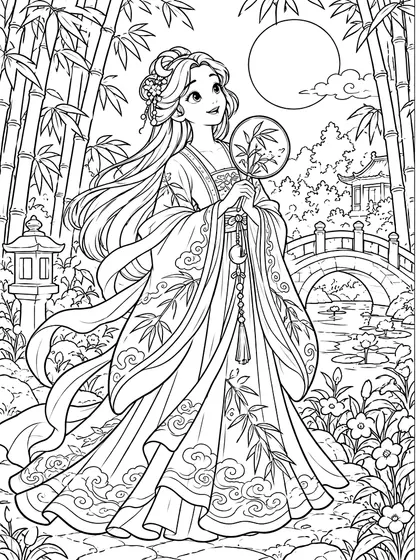
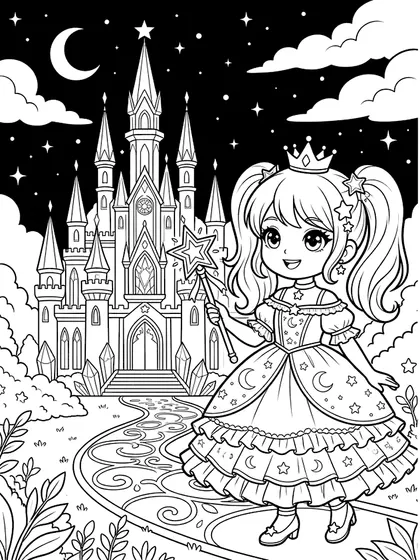
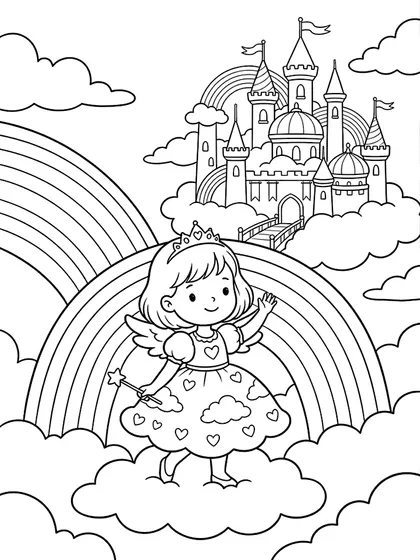
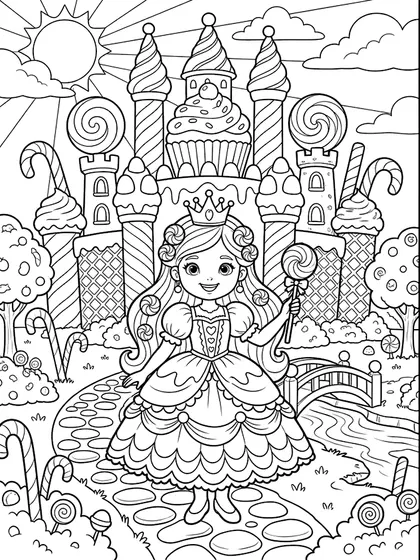
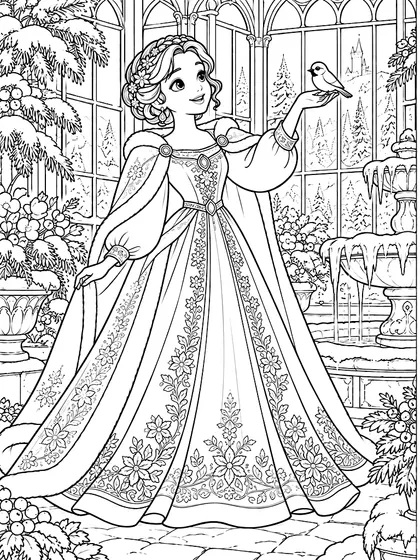
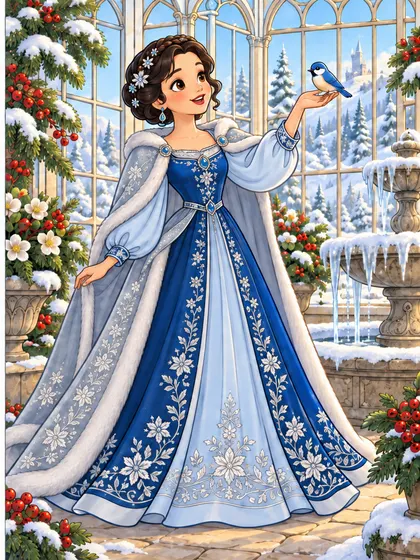
There are two princess series. The fairy-tale princess series has pictures drawn from old stories, such as Snow White, Cinderella and a swan lake princess. The princess and castle series has bold lines and large areas, which are easy for young children to color. Mixing both series within a group gives you a wider range of story ideas.
Materials
- Four princess pages per group (all different), plus pencils or crayons
- A story frame: fold an A4 sheet into four boxes and write “Once upon a time,” “But then,” “Just then,” and “So” in the boxes.
- A talking object, such as a pencil or a small toy. Only the child holding it speaks.
- A timer (optional) and a large sheet of paper if you will make a castle map
A 45-minute running order
- Warm-up, 5 minutes: ask which princess stories children know, and just collect the names. No one has to retell a plot. Tell them, “Today we make a brand-new story.”
- Coloring, 20 minutes: while they color, ask once each, “What shall we name this princess?” and “Who lives in this castle?” A child may give a new name even if the page has one of its own.
- Story relay, 15 minutes: lay the four colored pages in the middle of the table. Each child adds one box of the frame in turn. After one round, change the order and go around again.
- Wrap-up, 5 minutes: each group shares one favorite sentence from its story, and the colored pages go up as a classroom display.
The four-box rules
- Box one, Once upon a time: introduce the main character and the place. “Once upon a time, Princess Luna lived in the Starlight Castle.”
- Box two, But then: a problem appears. A problem that can be solved works better than a scary one. “But then the star lanterns in the castle started going out one by one.”
- Box three, Just then: a helper or an event arrives. “Just then the gardener came running with a ladder.”
- Box four, So: solve the problem and finish. “So the castle glowed again.”
- Only the child holding the talking object speaks. Do not change or reject what the previous child said; take it up with “Yes, and...” and carry on.
Choosing roles
If you decide beforehand that the owner of each colored page plays that princess, there is no squabbling over who gets to be the princess. Prepare other roles that anyone can take, such as the castle gardener, the guard knight, the castle cook, a talking bird or a wizard. Children who do not want to be in a princess story are often happy to join as the knight or the gardener.
Drawing role slips from a folded paper is a fair way to choose. After one round, swap and let everyone try a different role. Tell children in advance that the problem does not have to be solved by the princess; the gardener or the cook can do it just as well.
Story starters from each page
- Cinderella and Snow White pages: many children know the original stories, so ask, “What was the day after the story ended like?” or let them turn the page into a completely new tale.
- Starlight princess Luna: use the night sky and stars, and drop in the problem of one star going missing.
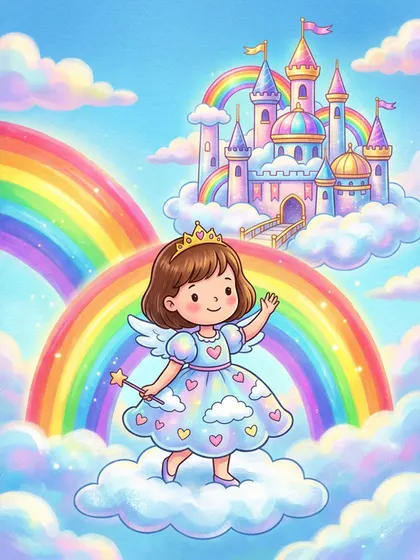
- Rainbow cloud princess Chloe: ask what would happen if the rainbow were missing one color.
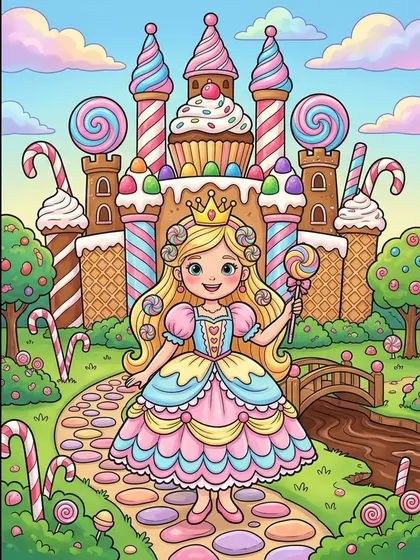
- Sweet candy princess Lolly: begin with the question of what happens when it rains on a candy castle.
- Snowflake crystal princess: invent a problem where the ice castle’s door is frozen shut.
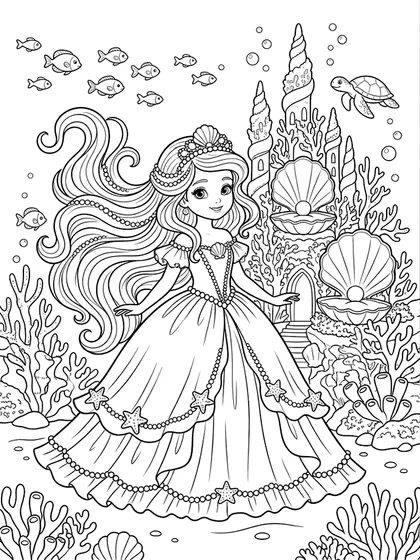
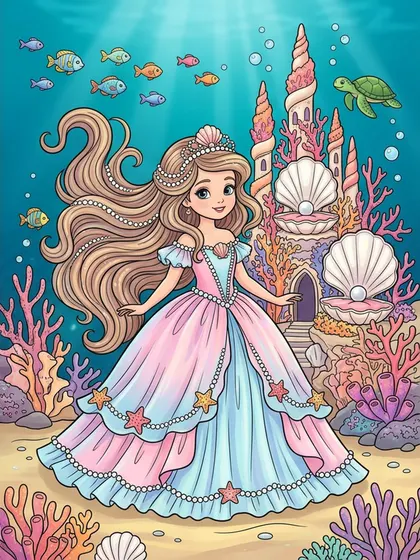
- Ocean pearl princess Marina: build a story about a search for a lost pearl.
Link the pages into a kingdom map (optional)
If time allows, glue the group’s pages onto a large sheet, draw roads between the castles and call it “our kingdom map.” When you play the relay again, children can trace the road with a finger to show which castle a character travels from and to, and the next event becomes much easier to think of. It is also why stories grow longer than they do with a single page.
Adjusting for age
- Age 3: skip the four-box frame and ask three questions instead: “Where does the princess live?” “What happened?” “Who helped?” Children answer with one word or by pointing at the picture, and the teacher joins their words into sentences. The bold-line princess and castle pages work well.
- Age 5: use the four-box frame and the relay as written. If children struggle with turns, make sure the talking object really is passed around.
- Age 7 and up: have them write two or three sentences in each box, with dialogue in quotation marks. Add a cover picture and the four boxes become a short storybook.
Common mistakes and safety
- One talkative child carries on and on: stick to the rule that only the holder of the object speaks, and keep each turn to about 30 seconds with a timer.
- The story never ends: fix it at four boxes, and give children an ending line to use in the last box, such as “And everyone lived happily.”
- A story gets too scary: allow only one problem at a time, and if a situation cannot be solved by magic, the teacher gently suggests another direction.
- Starting the story before coloring is done: the story ideas come from the colored pages, so finish coloring first.
- Scissors: if pages are cut out for the map, use safety scissors and have children sit while cutting.
If you run short or have time left
If time is short, do just one round of the relay and save the sharing for the next session. The teacher can write the story down and read it back next time so the group can pick up where it left off. If time is left over, write a letter to a character or give each story a title and attach it under the colored page. At home, the same game works as a bedtime story where each family member adds a sentence.
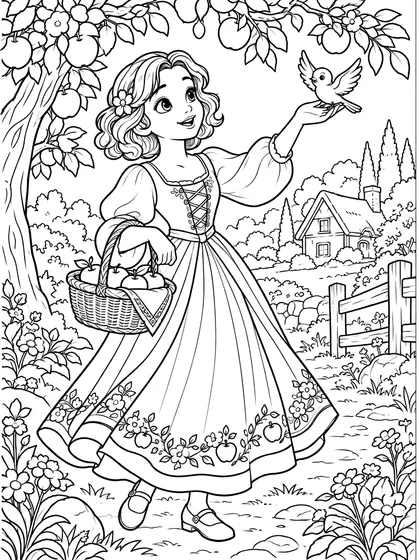
Pages used in this article


FAQ
Can boys join in with princess pages?
Of course. Anyone can color the pages, and if you prepare roles such as knight, gardener, cook and wizard alongside the princess, everyone can take part comfortably.
How big should a group be?
Four is easiest, because each child takes one box of the frame. With fewer children, one child takes two boxes; with more, two children share a box.
How do we record the story?
At age 3 the teacher writes the story down and turns it into sentences; at age 5 children record it in pictures on the frame sheet; from age 7 they write it themselves. Taping the frame sheet to the back of the colored page makes it easy to display.
May children give the princess a different name from the page?
Yes. Choosing a new name is the easiest way to begin a story. If many children know the original tale, you can also keep the original name and invent what happens afterward.